(Boiled Chicken and Cabbage, Caldo de Pollo con Repollo or Chicken Stew)
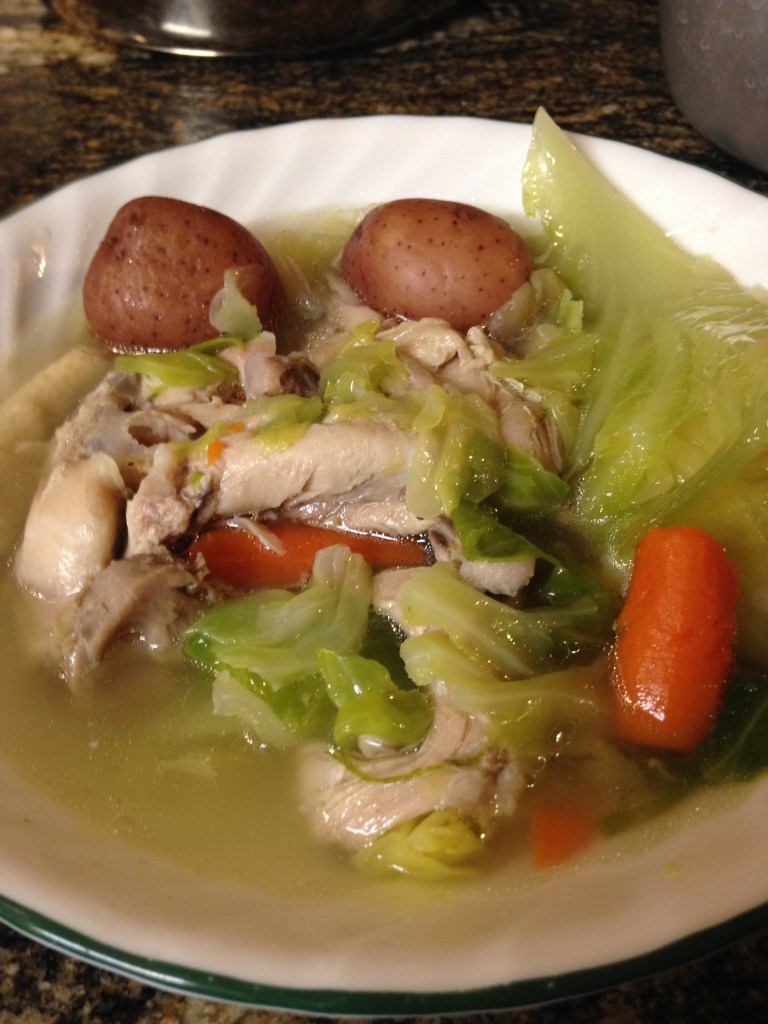
This dish is also a very popular or a common dish specially on Christmas potluck dinner with families.
Procedure:
Put the chicken in a pot and cover with water. Add a couple of bay leaves and 2 teaspoons salt and a few whole black peppers. Heat to boiling, skim off the scum when it starts to boil, then simmer covered for about 15 minutes or until chicken is done but not falling apart. Add two green onions cut 2 inches, carrots and new potatoes if desired. Let it simmer again for a few more minutes then check if the potatoes and carrots are done. Add the cabbage when the other vegetables are cooked. Let it boil again then turn the heat off or remove from heat. Taste, add more salt if needed and add MSG (1/2 tsp.) if desired. Try not to overcook the cabbage.
You may also add a chicken bouillon cube or two or a tsp. or two of chicken powder.
Unlike the chickens we are used to here in the States, these chickens were tough and had to be cooked or simmered for a long time, usually for an hour or so, almost like cooking pork or beef.
This dish seemed especial in the Philippines when I was growing up. Dressed whole chickens were not available at that time because of lack of refrigeration so it was a lot of trouble to make this dish. Chickens were sold alive at the market and brought there by the farmer-vendor/s usually when it was getting closer to the weekend.
We carried a hard, rounded basket woven from bamboo-skins with a single stiff handle to the market where we put in the food items we bought to make fixings for the day’s meals. We bought the different ingredients separately from different vendors selling the specific items for the dishes planned for the day. The basket was usually carried hung on the lower arm while balanced on the hip. If you bought a chicken and after you had chosen what you wanted, the vendor would tie the chicken’s legs together and hung the chicken upside down on the handle outside the basket and the poor chicken swung and hit the basket all the way while walking home. No wonder the chicken was almost faint when they got home.
Then, there was the chore of killing and dressing the chicken. In order for the chicken to stay put, the wings were folded together behind the chicken, stepped on with one foot by the person doing the slaughtering and the tied legs were also stepped on with the other foot while the butcher was squatting or sitting on a low stool gripping the chicken’s head. The chicken’s head was raised, some neck feathers were pulled out then the neck was slit with a sharp knife (better not be a dull knife) but not severed. The chicken’s blood was sometimes collected at the same spot in a saucer or bowl that had either a thin layer of raw rice or a little vinegar as the chicken bled out. The chicken was held put in the same position until it died to prevent it from running amok around the kitchen, which did not take very long. When the chicken was dead, it was dipped in boiling water for a few seconds for the feathers to be easily plucked. The coagulated blood was sometimes added in the soup, cut in smaller pieces. Because it was coagulated and gelled, it did not disperse in the broth as they were solids.
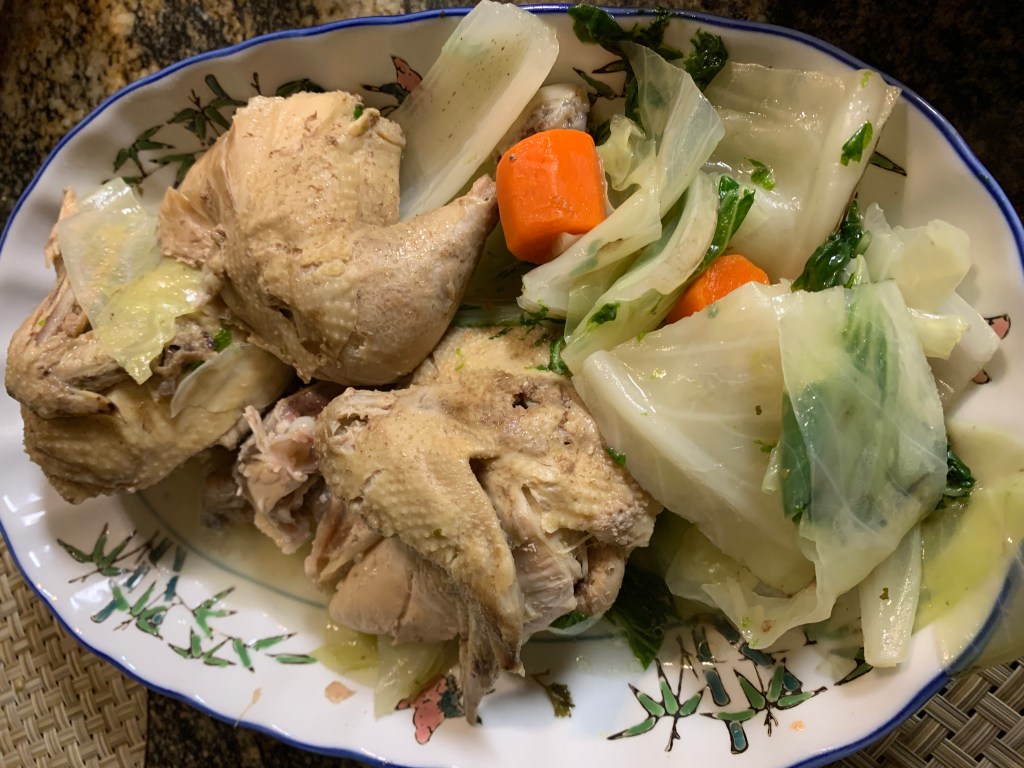
The broth can be served in bowls separately. Like all Filipino dishes, it is also eaten with rice, with lemon or calamansi and patis as dip for the chicken and the veggies
 Kusina ni Norie
You must be logged in to post a comment.