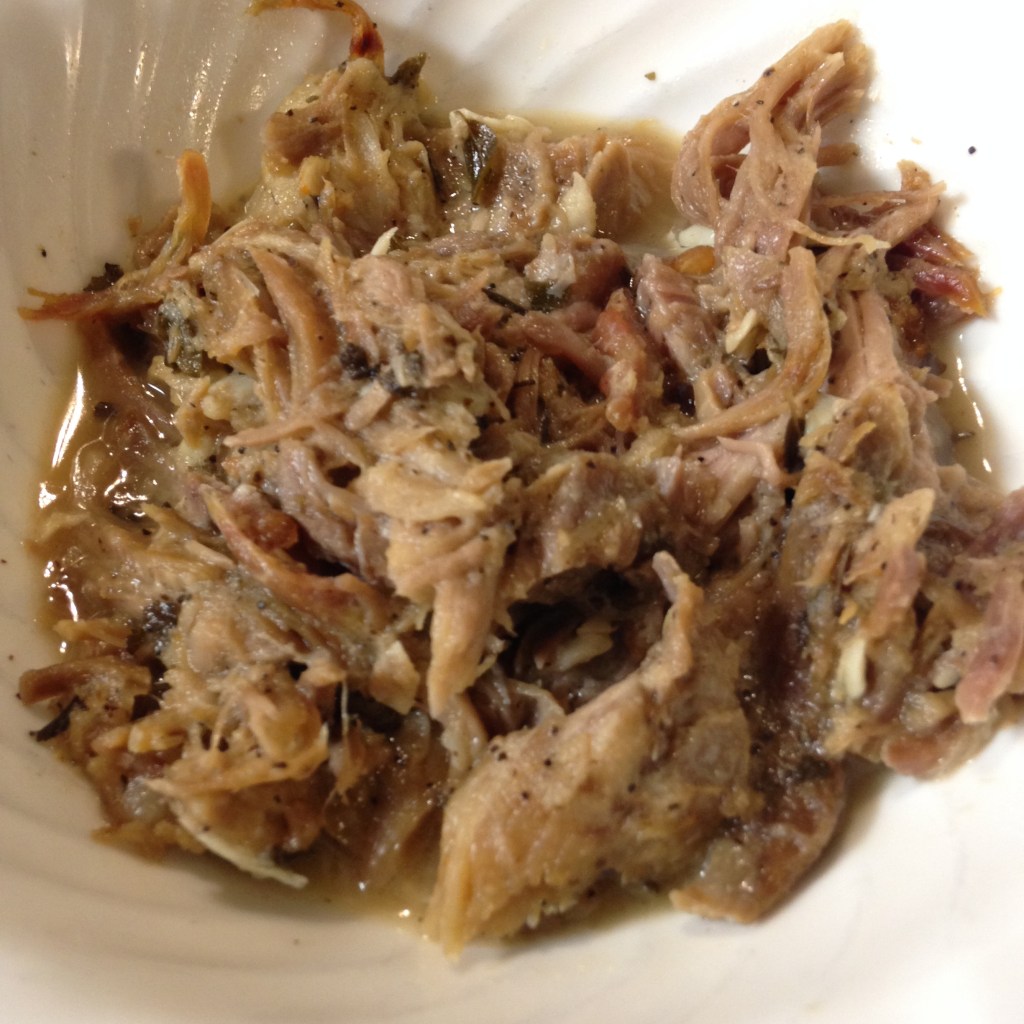
There is usually some meat left in a roast, especially if it was a whole pig as in Filipino lechon. This dish is what I always waited for after a Fiesta because I like the taste of it eaten with rice. It is tangy and sweet with delicate flavor of the herbs in it.
Traditionally, after the meat is taken off the bones it is simmered with the leftover sauce the lechon was served with as dip.
This “barbeque sauce” is made with the pig’s liver, grilled then ground or pounded, then cooked with seasonings and herbs.
I do not have this sauce but it can be bought at the Asian store but I do not really care for it too much. I cooked this leftover pork roast without the traditional sauce and it came out good, just the same. I even like it better.
Cut out and scrape out three to four cups of meat from the roasted shoulder’s bones (see Pork Shoulder Roast recipe), put them in a small pot then add:
- 2 cloves garlic, smashed
- 1 heaping teaspoon dried oregano
- 1 bay leaf
- 1/3 cup vinegar
- 1 cup water
- ¼ cup sugar (white or brown)
- ½ tsp. coarse black pepper
- ½ tsp. onion powder
- 1 tsp. salt or to taste
Scrape and add the dried up drippings or fat from the bottom of the roasting pan for added flavor.
Stir to mix them up before you turn on the heat. Heat to boiling then turn the heat on low to simmer but do not stir until after 5 minutes of simmering, otherwise the vinegar will taste raw. Cook and simmer covered for about 30 minutes or so until the meat is fork tender that can be shredded and the flavors have melded.
Taste and adjust your salt. Add a little more water if it seems dried. It has to have a little gravy in it like adobo. Leftover brown pork gravy can also be added to thicken the juice. Or thicken it with cornstarch or flour dissolved in a little water.
The taste has to be balanced between the acidity of the vinegar, the sweetness of the sugar and the salt, kind of sweet and sour sauce. Add a little water if you think it is too vinegary when you taste it after it is cooked because the vinegar loses its strength after it is cooked.
Use non-reactive pot when cooking with vinegar. Stainless steel is non-reactive and so is Pyrex glass. Cast irons are okay but it may react with vinegar which may not be toxic but may alter the flavor. What to avoid is unlined aluminum pot. Aluminum reacts with acids that may have an unsafe result healthwise.
 Kusina ni Norie
You must be logged in to post a comment.