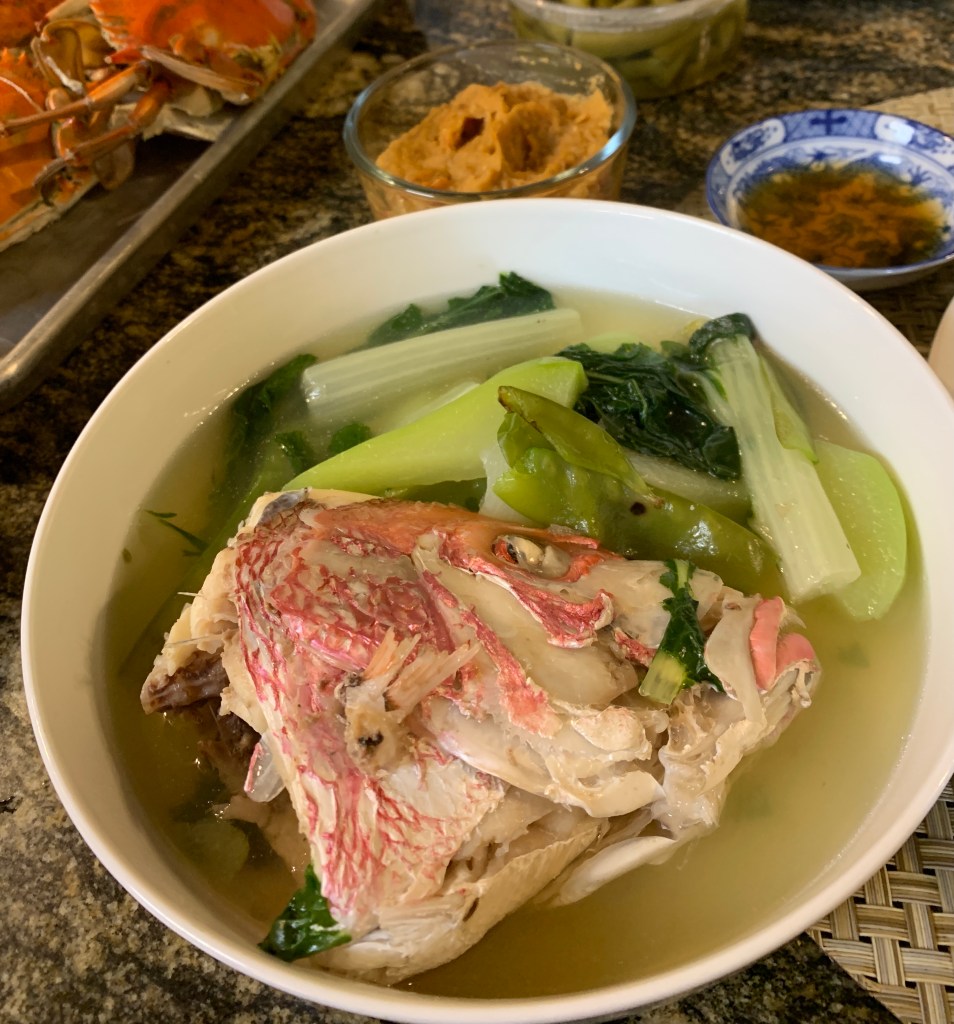
How would you like to have a bowl of soup with a large head of a fish that seems looking angry and staring at you? We, Filipinos are used to eating this so it doesn’t bother us a bit. In fact we ask for the fish heads from the fishmongers to make soup with. Sometimes they even give them for free here in the U.S.
This particular fish above, was the head of a red snapper (maya-maya in Filipino). Of course, my husband would not touch it so I fried the rest of the fish for him. He doesn’t like fish cooked any other way except fried in cornmeal.
I am a little picky and selective too as far as fish is concerned and red snapper is a good fish to cook this way. The hot broth is very refreshing because of the ginger root in it. The vegetables I used are good in it too. The fish head has a lot of very tender meat if you are just patient to pick it from the cheeks and between the bones in the head but exercise care with the bones. They could hurt you. I love the eyes too. They are delicious. I cooked this dish with only the fish head because that is all I need for myself and it feels sacreligious to waste a good fish head.
This dish is not cooked with fish heads only but can be cooked with the whole fish or the regular fish steaks or fillets. It is cooked normally with certain kinds of smaller fishes in the Philippines. But most commonly, dalag or mudfish is used to cook this over there. Mudfish is sometimes available at the Asian store such as Hong Kong Market in the Houston area but I never bought any because I’m not familiar with how to clean it anymore.
I’ve seen how mudfish was cleaned when I was growing up and it entailed many procedures including rubbing ashes on the skin and rubbing the skin against concrete, stone or brick. I guess it’s because the fish live in mud as the name suggests and the skin is usually black or very dark brown but the flesh is very white and delicate. I remember that it tasted bland and not fishy at all. They are usually bought at the wet market still alive. Mudfish can breath in water and also air. They can live for a long time out of the water.
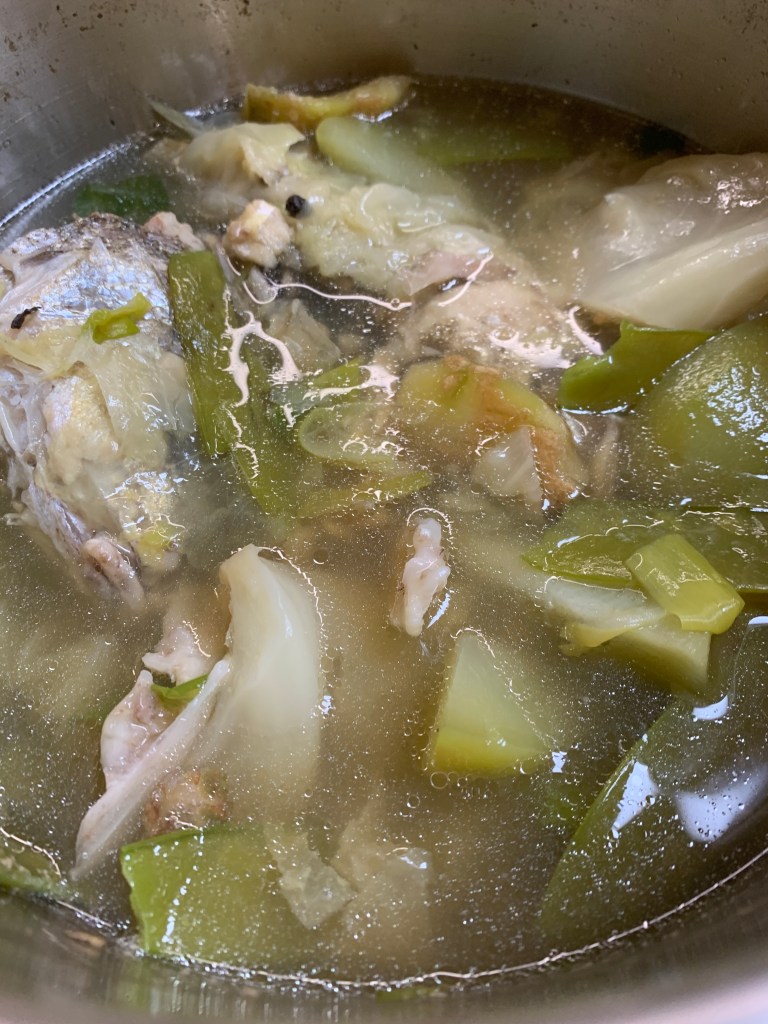
How to cook:
- Fish, preferably fresh
- 1” ginger root crushed or sliced
- 2 scallions (green onions) cut about 4 inches long
- 1 tsp. cracked black pepper or whole pepper corn
- 6 cups water or to cover the fish
- 1 Chayote squash, skinned, seed sliced off and the flesh cut large lengthwise
- A few leaves Bok Choy or Chinese cabbage or regular cabbage
- 1 tsp. salt
- 1 tsp. Patis and MSG (optional)
Boil the water with ginger root and black pepper. Simmer for a few minutes then drop in the fish, the scallions and patis (fish sauce). Bring back to boiling and simmer for a couple more minutes. Add the Chayote squash pieces and cook until they turn to darker green then drop in the rest of the vegetables. Cook until the cabbage is done, about 2 minutes. Taste and season with salt and ¼ tsp. MSG if using.
This is good eaten with rice with a little saucer of patis with lemon as a dip for the fish and the vegetables. Spoon a drop of patis with lemon on the rice with the broth as you eat. Have some broth in your individual soup bowl, sip it from time to time with your spoon while still hot and enjoy.
In the Philippines, this dish is usually accompanied by a dip or a side dish called “Ginisang Miso”. It is a mild kind of miso authentic to the Philippines. It is not as salty as the Japanese Miso that is commonly found in Asian groceries here that is used in the Japanese Miso Soup.
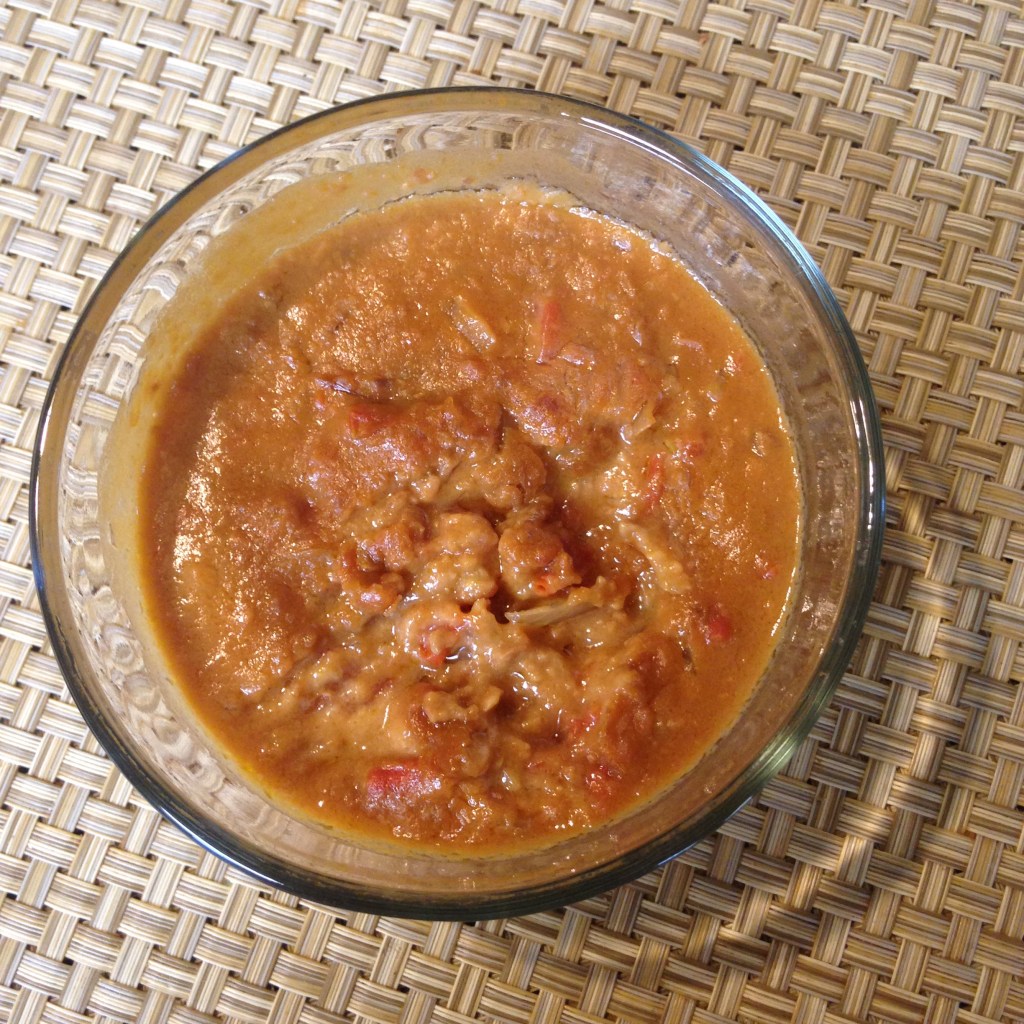
Because Japanese or Chinese miso is the only miso I found here, I tried it once but I could not eat it because of its saltiness. I found a package that is labelled Lower Sodium so I bought one and tried it. It is not the same as I remember I had in the Philippines but is close enough.
I saw recipes of this dish online from some bloggers that say to fry and brown the fish first. In the Manila area in the Philippines where I was from, I didn’t see my family, neighbors and/or relatives fry the fish before adding them to the broth. They do not saute the onion, garlic and ginger root either. The way I described how to cook it above is how I learned to cook this dish. So, it’s up to you how you want to cook your pesa.
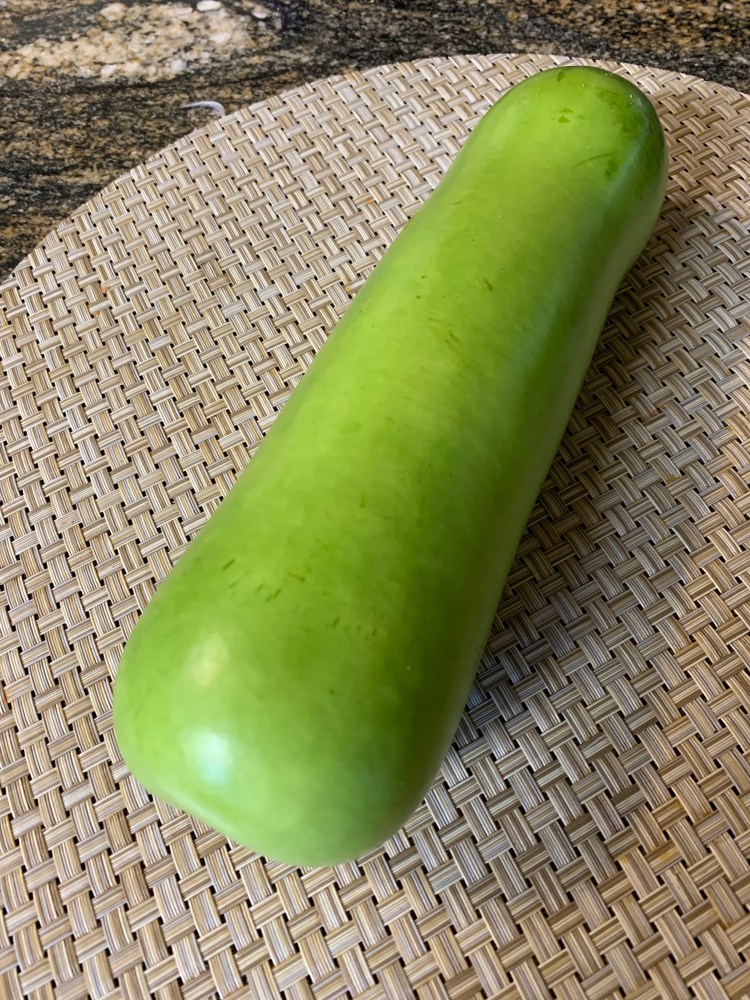
We actually use upo or gourd (soft squash) in it but I substitute chayote squash for the upo because that’s what is available here. I also prefer to dip it in patis and calamansi instead of miso even as I was growing up in the Philippines.
Some cooks also use the water from rinsing raw rice (rice washing) for the broth. I do not see the advantage or difference in flavor in the soup myself so I don’t use that. In my opinion it will make the broth cloudy and you are adding to the broth the starch or talc added to the rice that you are supposed to rinse off before cooking it.
 Kusina ni Norie
You must be logged in to post a comment.