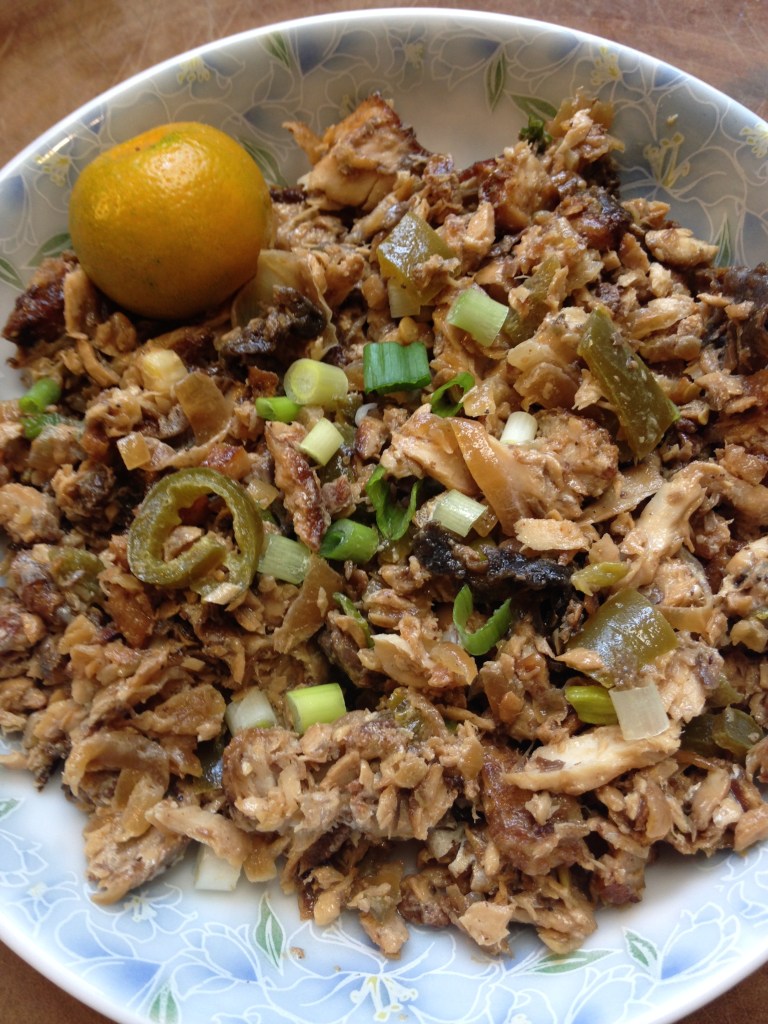
Sisig originated from the Province of Pampanga, north of Manila. Sisig means something sour in the Pampanga language (or dialect). The person or people who originally cooked this and made it nationally popular had in mind to serve the dish to snack on while drinking beer for the sour taste complements the beer. Drinking beer with friends is a common past time of men in the Philippines.
Sisig is a dish originally made with pork head and ears or pork belly. The meat is pre-cooked, either boiled or grilled or both, then chopped in small pieces and cooked again to finish the dish. Sisig made with bangus was invented by other people who liked to eat fish in lieu of fatty meat but became popular too.
To my surprise this bangus dish was excellent. Even though it was a lot of trouble to make because I de-boned the bangus myself. The bangus I had was not boneless but it was well worth the effort of cleaning and pulling all the bones from this fish with surgical forceps. Even my husband who didn’t like to eat bangus liked it and said it was surprisingly good and did not taste fishy.
- 1 Pickled Jalapeno sliced
- 1 pickled jalapeno, diced small
- ¼ c soy sauce (divided)
- Salt and pepper
- 2 TBS. mayonnaise
- 1 TBS butter
- Cooking oil
Sprinkle a small amount of salt on the fish. Add 2 tablespoons soy sauce and about 1 TBS lime juice (or the juice of 3 calamansi without the seeds. Marinate the fish for at least one hour. Cut the fish in half to fit in the skillet.
Heat a frying pan or wok until hot then pour cooking oil in it just enough to cover the bottom for frying and heat until hot again. Carefully place the fish in the hot oil, skin side down. Frying this fish always makes the oil splatter and explode so always have a splatter guard or a lid to avoid hot oil exploding on you. It’s best to fry this fish outside or be prepared to clean up the mess in your kitchen. Fry until the skin is crisp and brown then turn over and fry until light brown. Do them in batches. Transfer to a plate and let cool. When cooled, chop the fish in small pieces including the crispy skin. Don’t worry about the scales if the fish had scales on. Filipinos don’t mind eating them and if the skin with scales were fried to crispiness it will be good.
In a clean skillet, heat the butter then drop the ginger. Sauté the ginger until almost browned then scoop out and discard. You can leave the ginger in if you don’t mind to eat them.
Drop the garlic in the same butter, sauté until fragrant and drop in the onions. Stir until almost transparent then add the chopped fish. Stir a few times and add 2 more tablespoons of soy sauce and 1 tablespoon lime juice or juice of 3 more calamansi. You can add more if you like it sour. Add the diced jalapeno, more or less to your taste. Stir a few times until heated through.
Transfer to a serving dish and add the 2 tablespoons of mayonnaise and stir to blend. Taste and adjust your seasoning. Add salt and pepper as needed. Garnish with the chopped green onions and jalapeno slices.
Filipinos like to add red labuyo peppers cut in small pieces on the top for garnish and for heat. They are very spicy hot.
Variation:
For a regular bangus that is not boneless, I steamed the scaled and butterflied portion of the fish that I used. I cooked only half of the large milkfish and was the tail part. I used the head part for something else. After it was steamed for about 20 to 40 minutes, I let it cool and pulled the meat apart while pulling the bones out. The bones then came easier and I could see them.
I followed the rest of the procedure from marinating and frying. It did not explode too much and I just used a screen guard without too much mess.
It was just as good but I think next time I will try to make it without frying. I think it will be good too.
 Kusina ni Norie
You must be logged in to post a comment.