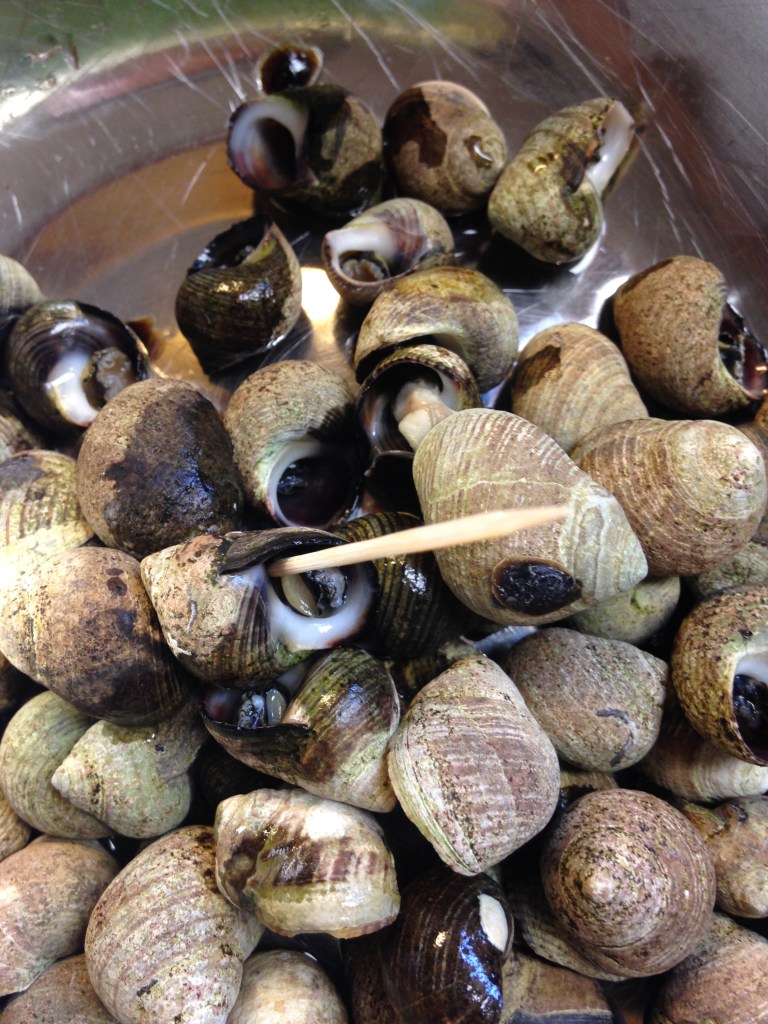
French, English, Australian, European, Asian delicacy.
I’ve been ignoring these little snails at the fish markets, especially at the Asian market. I thought they were the same as fresh water snails that sometimes could infect you with intestinal parasites. But one day, for some reason I thought I’d try them. Still a little nervous and leery, I looked up “Periwinkle” snails online and I was surprised that they are known and eaten worldwide especially in England. However, they are not as popular now as they were in the olden days when people sometimes gathered them themselves along the beaches.
These little snails are marine mollusks found in tidal pools on rocks along any coastlines in the world. They are similar or better tasting than clams, oysters or abalone. You just have to have patience because they are very tiny. You also need a sharp toothpick to pick the meat out of the shells.
It reminds me of escargot, except the latter are much bigger and also, they are land snails (I think) that eat your plants. These little snails eat algae from the rocks. They are found on rocks that are not submerged in water because they breathe air like oysters and clams. Try them. They are delicious.
How to cook:
The periwinkles I bought were alive so I soaked them in salted water for about an hour to purge. Then I rinsed them repeatedly in cool water until the water was cleared of poop and sand.
Boil 2 cups of water with 1 ½ TBS Kosher or sea salt. Drop in the periwinkles and boil for about 5 minutes. Drain to cool.
Heat 1 TBSP butter then sauté 2 large cloves garlic, crushed and minced, until fragrant. Sauté the periwinkles in it for a minute. Serve.
I only bought one pound of periwinkles to try. I think one pound is enough for just one person.
Now that I’ve tried eating these, I can think of many recipes or ways to cook them.
Next time I will try the periwinkles in a Filipino dish that uses freshwater snails called Kuhol with kangkong and bagoong.
 Kusina ni Norie
You must be logged in to post a comment.