(Sun-dried fish)

Daing (pronounced dah-ing) is salted fish dried in the sun. Tuyó means dried. Any kind of fish can be made daing, from very tiny fish to large fish. Salting and drying preserve the fish for a long time without refrigeration and people had done it for eons, way before refrigeration was invented. It is the same as making meat jerky except it is called daing for fish and tapa for meat.
Daing and tuyó were considered poverty food because these tiny fishes are plentiful and they are cheap to buy. Some people who live close to the water could catch fish for their own consumption and this is the way they preserve their catch. However, daing and tuyó are now accepted and enjoyed by different social classes in the Philippines including the upper class. You can also buy them at Asian markets here in the U.S. or other countries.
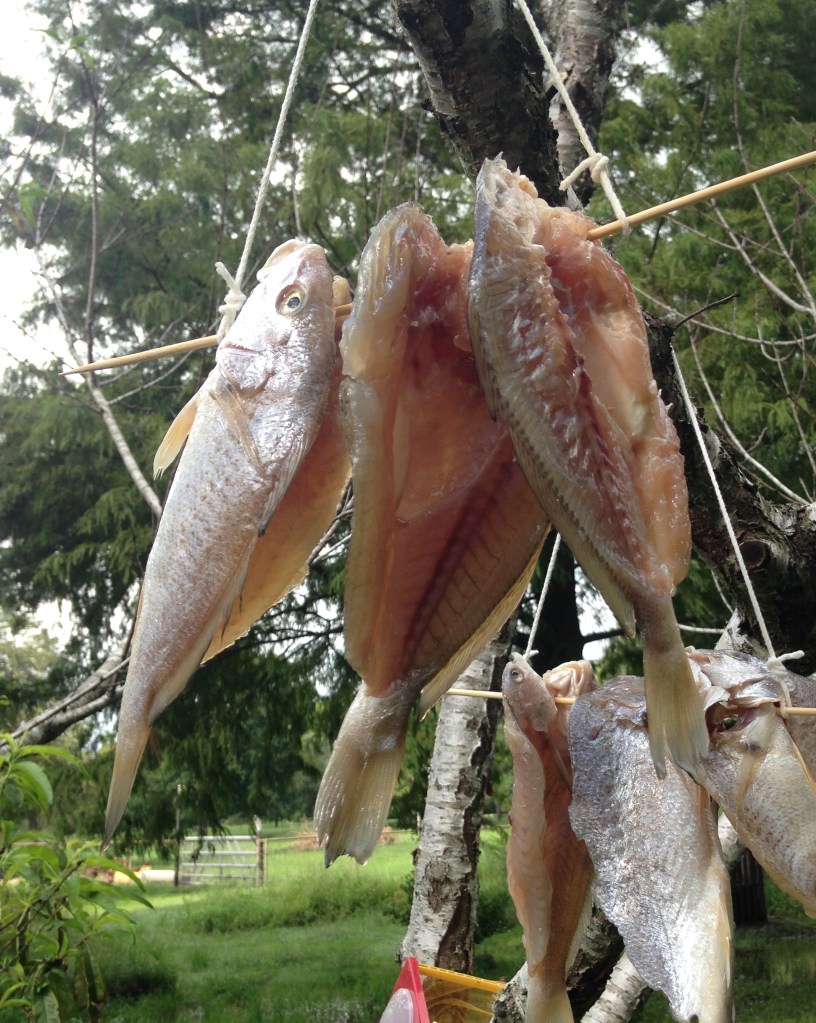
There are different variants of daing. Some are cleaned and butterflied, salted heavily and dried in the sun as in the picture here and there is a variant where the fish is marinated in vinegar, garlic, salt and pepper. This type of daing is popularly made with milkfish (bangus). It is not dried but made the same day it is to be served. Another type of daing is that fishes such as some type of sardines about 6 inches long are salted whole but not scaled or eviscerated, meaning that the fish are not gilled or gutted and they are also sun dried.
It is only my opinion from observation that the word “daing” means the fish is butterflied because I heard it called “daing na tuyó” (dried daing) and they call the small whole dried fish just plain “tuyó”. They call the butterflied milkfish or bangus that is marinated in vinegar and garlic and fried but not dried, “daing na bangus”. They sometimes call a fresh, butterflied fish “dinaing” (cleaned and butterflied).
All types of daing are cooked before eating. The most common way is pan-fried and the other is charcoal grilled. Some daing, especially the larger fish are boiled with some vegetables, particularly a type of squash, called “upo” to make soup. This soup dish is popularly cooked and eaten on Good Friday or around Holy Week.
I caught plenty of small croakers when we went fishing so I thought I would try my hands on making daing. After cleaning and butterflying these fishes I soaked them in brine overnight.
For the brine, dissolve ¼ cup + 2 tablespoons pickling salt in 1quart (4 cups) water or 1-1/2 cups pickling salt in 1 gallon water.
Marinate the fish in the brine for at least 6 hours making sure they are all submerged in the brine. Weigh them down if not submerged.
Here they are, hanging in the sun to dry. But almost immediately after I got them hung and took this picture it started to cloud up then it started to drizzle. I had to take them back down and transferred them to an electric dehydrator.
I dried them in the dehydrator for over 8 hours at 155°F, the hottest setting. When they were dried, I pan-fried a couple to try them. I chopped some tomatoes, got a little saucer of vinegar and a plateful of rice and I was set to eat.
To eat the daing, you have to pinch or break just a very tiny piece of it and dip it in vinegar with or without crushed labuyo pepper then add a big spoonful of rice and a few pieces of tomatoes and enjoy.

Daing is very salty and so it is impossible to eat a large bite of it. Remember I said that this used to be a poverty food? It is because a large family of impoverished people could share a single tiny fish of tuyó or daing with a plateful of rice and could have their meal for the day…if they were lucky to be able to buy rice for one meal that day).
 Kusina ni Norie
You must be logged in to post a comment.