Halabos na Hipon at Alimasag
Halabos is simply shrimp cooked in a wok in very little water with salt. It is cooked uncovered until the shrimp is done and the water has dried.
I just had to include this here even if it doesn’t need a special cooking procedure because it is not always possible to have shrimp as fresh as these. These shrimp were left over from fishing as bait. However, they were bought alive and kept alive while fishing, which requires special equipment on the boat called “Livewell” or “baitwell”. It has a recirculating pump or a bubbler for continuous aeration.
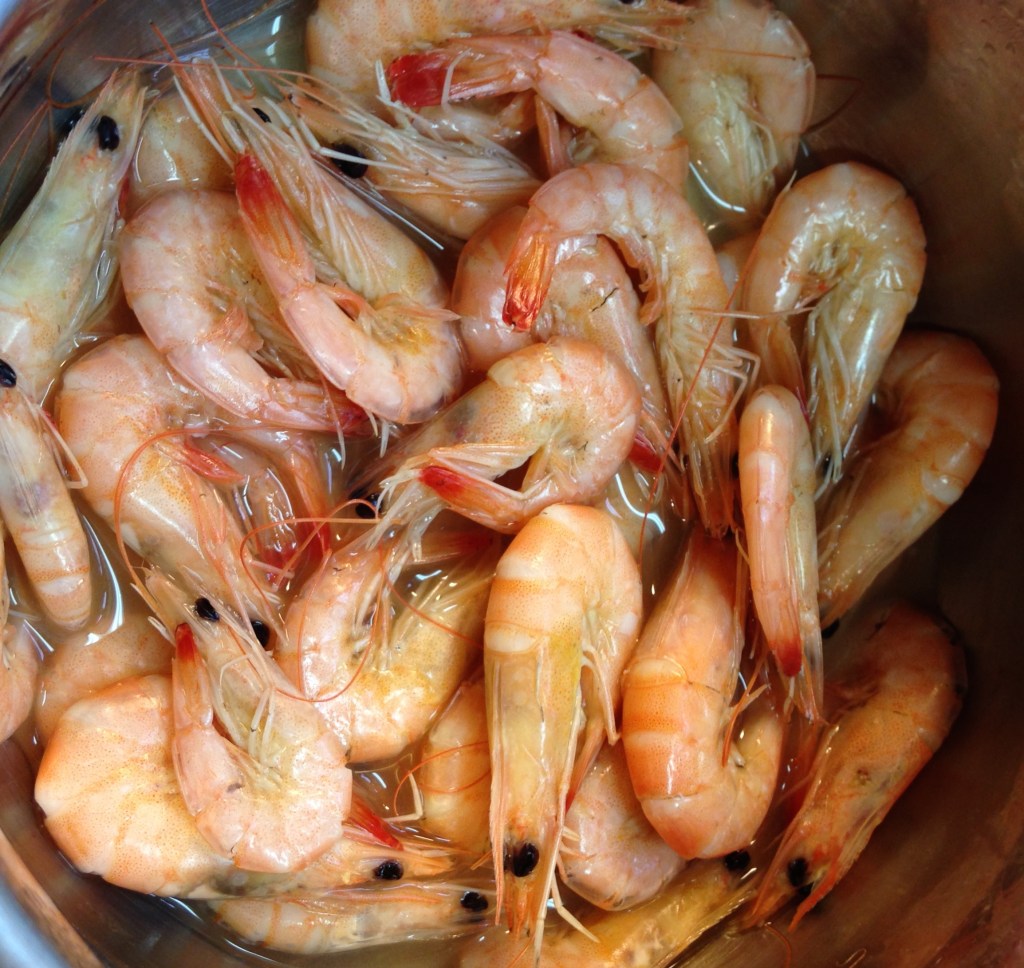
The live shrimp are purchased by the pint or quart and are very costly. They cost much more than the table shrimp that are bought by the pound and even if the table shrimp looked fresh they are incomparable to the freshness and sweetness of these live shrimp. So, if there are shrimp left after fishing, I keep them alive all the way home so I could cook them. I hate to dump them back in the water after fishing, which a lot of people do for not knowing what to do with them or they just don’t care or don’t know how good they are because usually the shrimp are small. They are as tiny as the popcorn shrimp after they are cooked.
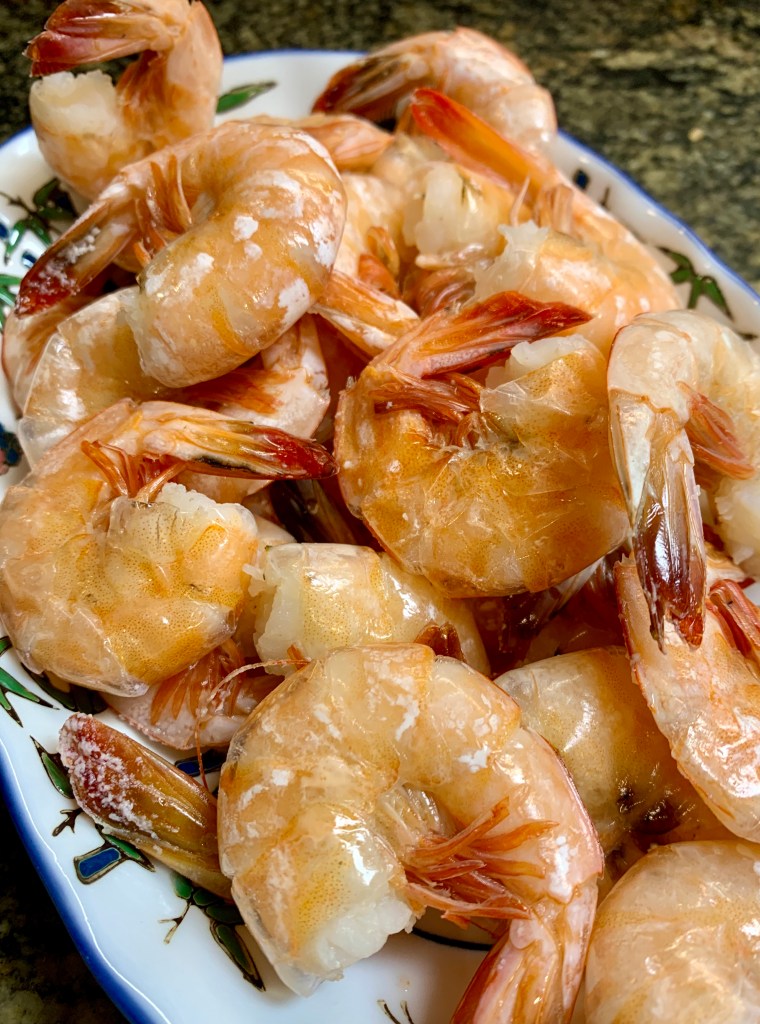
The Filipino way is boiling or more like steaming without any herbs and spices like Shrimp Boil or Crab Boil seasonings. Simply rinse the shrimp, put them in a shallow pot and sprinkle them with salt. Add a few tablespoons of water and let it boil until almost dry. Stir them up and remove from the pan.
Another way is to add about 1 tablespoon of lemon juice or calamansi juice over the shrimp, and of course, salt. Cover, turn on the heat and as soon as it boils, turn it down and simmer until the shrimp turn pink, about 1 minute. Remove from heat.
I found that if I boiled salted water that is deep enough to submerge the shrimp first then I drop in the shrimp, let it boil again then simmer for 2 to 3 minutes, turn off the heat and let it sit for a few minutes (about 5 to 10 minutes) to absorb the salt, the shrimp is tastier and easier to peel the shells.
This shrimp were small (not too small) and I ate them like eating popcorn shrimp. I peel some of them before I eat them but I like to eat some with the shell and all because I grew up in the Philippines and I’m used to eating them that way. All that was left from my bite was the part of the head just below the base of the horn leaving the eyes and antennae. Yummmmm!
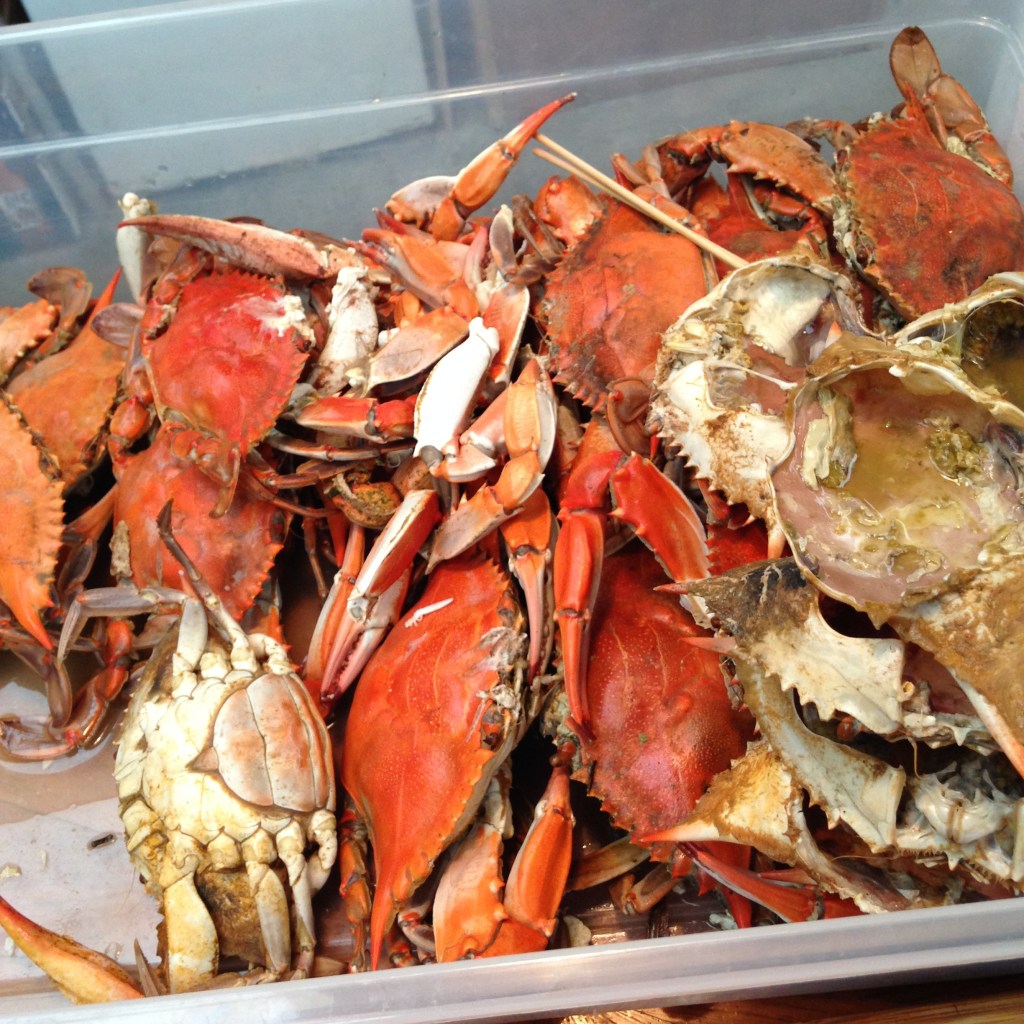

This is another dish that doesn’t need instructions to cook. All you do is boil water in a very large pot to accommodate the crabs you will cook.
A friend of ours had crab traps set up in the bay and caught a lot of blue crabs one weekend. He generously shared these crabs with us and gave me a five-gallon bucket full of large live crabs.
I quickly set up the pot and after all were cooked my husband helped me shell them to make seafood gumbo the next day that we shared with the next-door neighbors. We cooked and shelled 30 large crabs that evening and I promise none of the crabmeat landed in my mouth although I was definitely tempted.
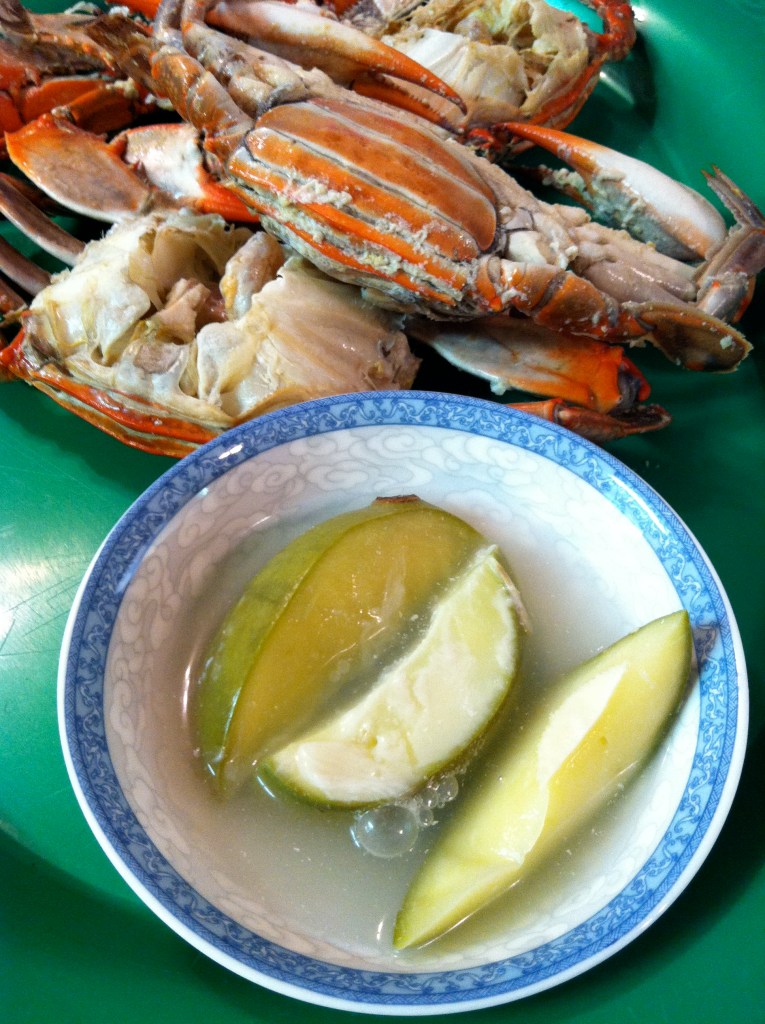
These crabs were fat and full of meat. I saved a few unshelled crabs towards the end of shelling for my dinner…. rice, crabmeat dipped in vinegar with crushed hot peppers with a little salt or with burong mangga (fermented green mangoes). I was in heaven! But my husband asked what’s for his dinner. He is a Gringo who can’t eat just boiled crabs and rice. I told him he could eat a sandwich as in PBJ.
Filipinos do not remove the carapace to clean them. That will kill the crabs and besides, we love the fat inside the carapace when we open the crab shell as we eat. We scrape this fat, the yellow-orange stuff inside and eat it. The fat is delicious but is high in cholesterol that is not good for anyone.
The crabs are cooked whole. However, I carefully washed each crab and brushed the underside of the claws because the hairy undersides collect mud and they won’t just rinse off. They need to be scrubbed off. To cook them, add salt to the water in the pot or add Zatarain’s or any Crab Boil mix. Boil the water and drop in the live crabs. Let it boil again and cook the crabs until they turn red. They are better when cooked alive, like cooking lobsters or any shellfish.
That was how I cooked them but the Filipino way is like cooking the shrimp. Put them in a pot, sprinkle them generously with salt and add just a little water and turn the heat on. The crabs will cook in their own juice.
There is no glamorous way to eat them. You just have to have a lot of napkins or paper towels. It’s like having a crawfish boil.
 Kusina ni Norie
You must be logged in to post a comment.