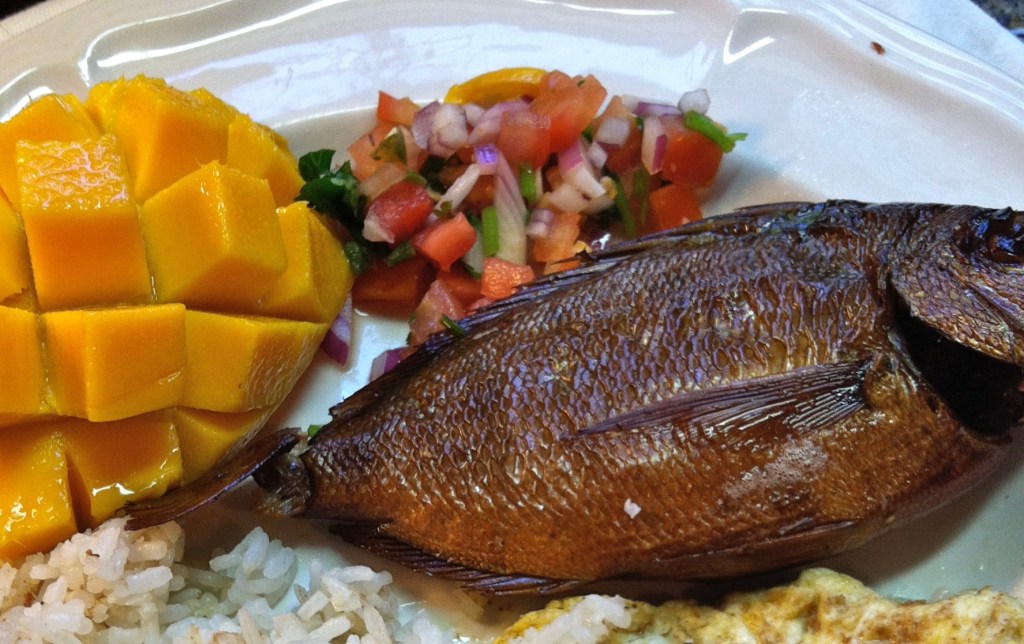
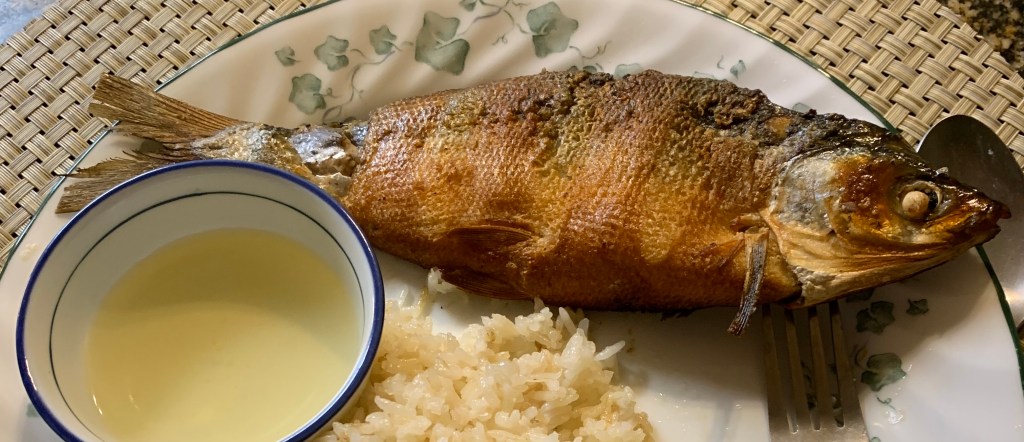

Here is a bonus. While I was fishing for bigger fishes I came across these perches that were about 4” to 6” long, which are pretty big for this species. They are good to eat to people who don’t mind the bones and they do have plenty of small, needle-sharp bones, hence they are called pinfish among others.
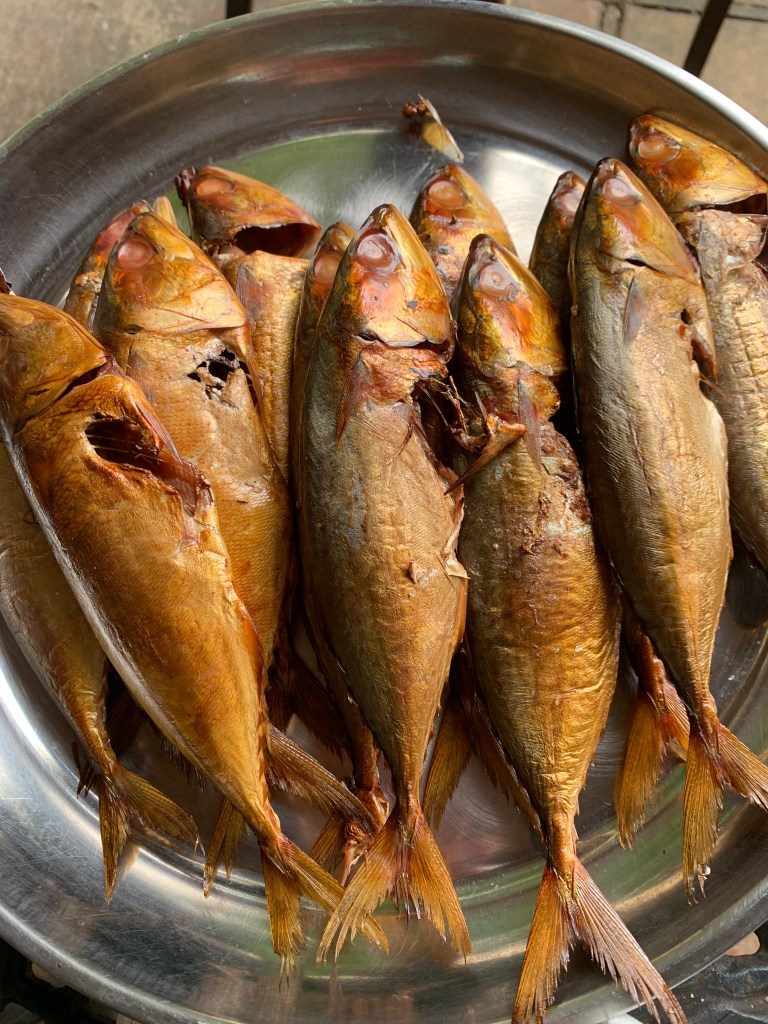
These Porgys, Pinfish, or Piggy Perch are small fishes and are considered trash fish by the more serious American anglers here on the bay or the Gulf. They seek the bigger sport fishes like trout, red fish, flounder or the bigger fish in the bay. I decided I’d keep them and try smoking them. I’m glad I did; they are very good.
So, if you are an angler and these little bait stealers are pestering you, keep them and smoke them as I did and you will be rewarded. That is if you are a fish eater and you know how to eat fish with the bones like many Filipinos do.
Procedure:
After washing the fish, slice them open from the back (dorsal) and remove the gills and the guts but leave the scales. Leave the fatty belly cavity too. It is very flavorful and also good for you as a source of omega-3. Put them in a pan and cover them with brine.
Brine:
Dissolve salt, preferably pickling salt or Kosher salt in warm water with a ratio of 1/4 part salt to 4 parts water (1/4 c salt in 1 quart water). Soak the fish in the brine for at least 1 hour (depending on the thickness of the fish you have). Stir the fish and salt solution at least once to ensure salt is dissolved and completely dispersed. Drain and rinse the fish well in cool water.
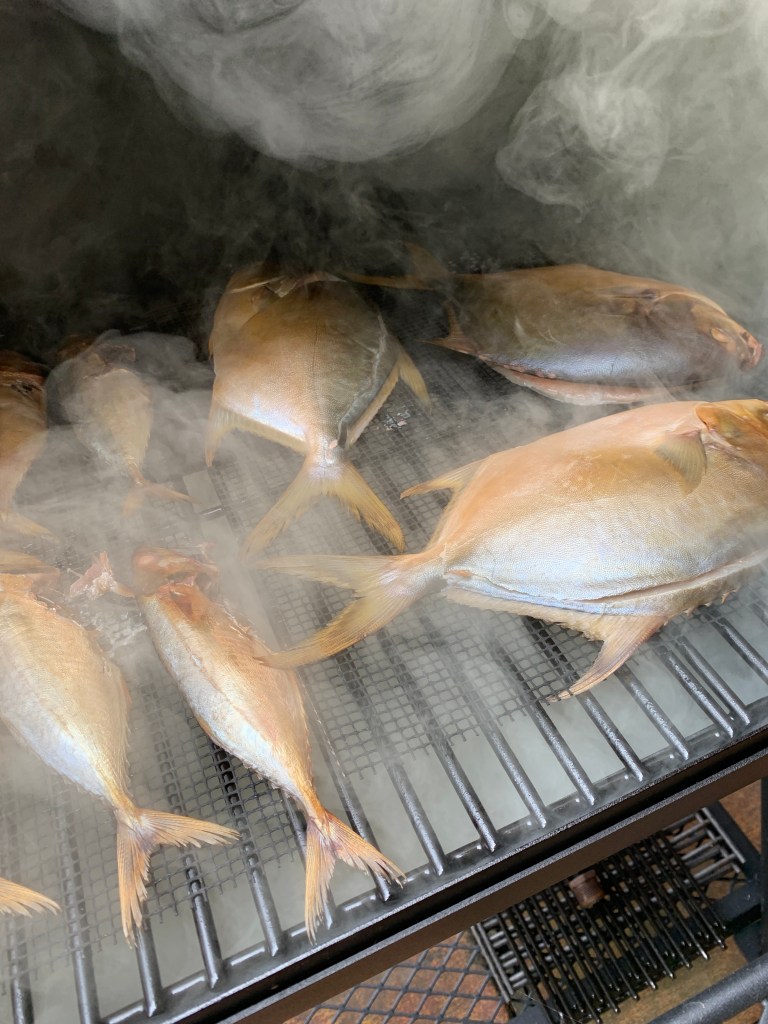
While brining the fish get your smoker ready. They can be smoked in a barbecue pit, barbecue drum or a vertical smoker. I used hickory wood chips and they were a little strong but with good flavor. Apple wood chip may be better and milder. I would not recommend mesquite because it may be too strong and bitter. But any available wood chip for barbecue should be good to use, even oak. The chips need to be soaked in water for a few hours or overnight if you are using non-electric smoker.
Dry each fish with paper towels. Arrange the fish on the rack farthest from the heat source. Smoke at 175° F to 200°F or on low for 1 ½ to 2 hrs. Check and replenish the wood chips if needed. (I used a vertical propane gas smoker).
They can be frozen until ready to use after they are smoked. Grill or pan-fry them before eating.
Tip:
If you can’t smoke them on the same day you can freeze the brined and rinsed fish and thaw them when you are ready to smoke them. Dry first with paper towels before smoking.
And you know as well as I do that you will need plenty of white rice to eat this with. A very little piece of the fish will take a long way, like it is only used to flavor the rice especially if you are eating with your hand, and follow it with a spoon of crushed tomatoes. You will be tempted to scrape the inside of the skin when the meat is gone to extract little tidbits and any remaining sap or flavor. You may have to force yourself to push the plate away to stop eating.
A very good dip for this is vinegar and garlic with siling labuyo (labuyo pepper) and a dash of salt if you are lucky to have a Labuyo plant growing in your garden or in a pot. The juice of calamansi squeezed on the meat is also something to die for. I squeeze three calamansi in a little bowl or platito and dilute it a little by adding a spoon or so of water and add a dash of salt. I dip the piece of fish in it and savor both. I get my daily vitamin C this way also. Lemon juice can be used in lieu of calamansi juice.
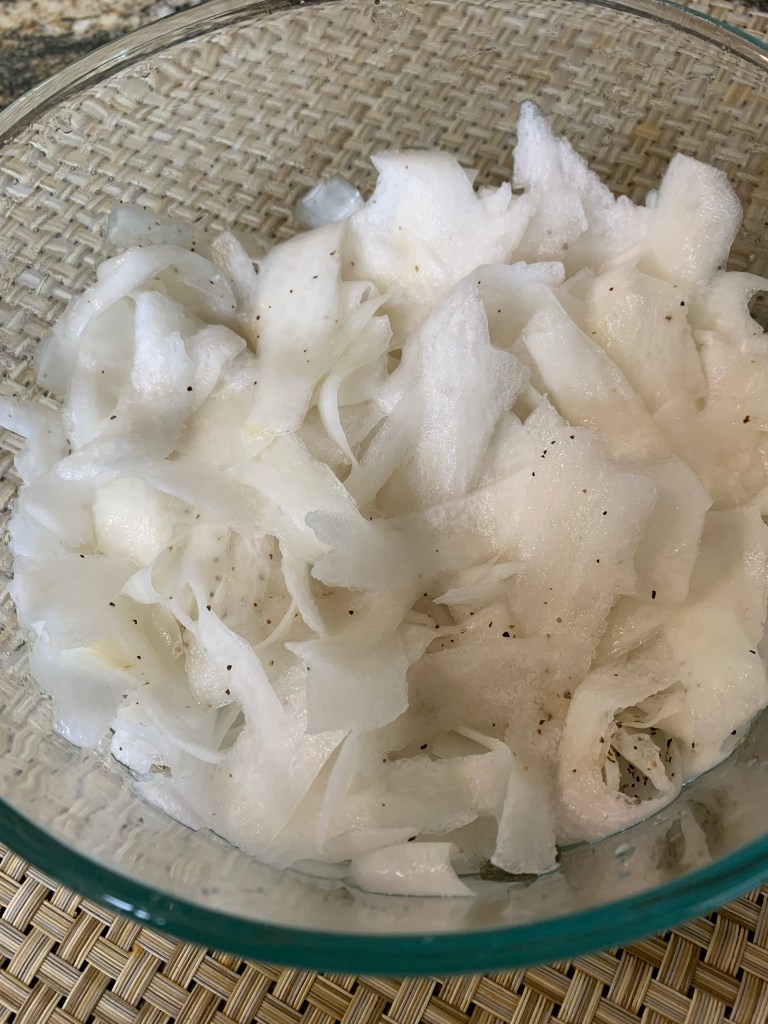
A very good accompaniment with the tinapa is thinly sliced daikon radish shaved with a potato peeler and soaked in vinegar with a little salt and sugar to taste.
This is so good that it will remind any Filipino of home and may make him/her homesick just from the smell of this smoky fish. Never mind the American spouses who will not touch these little fishes. It’s good that they don’t eat them; there are more for us.
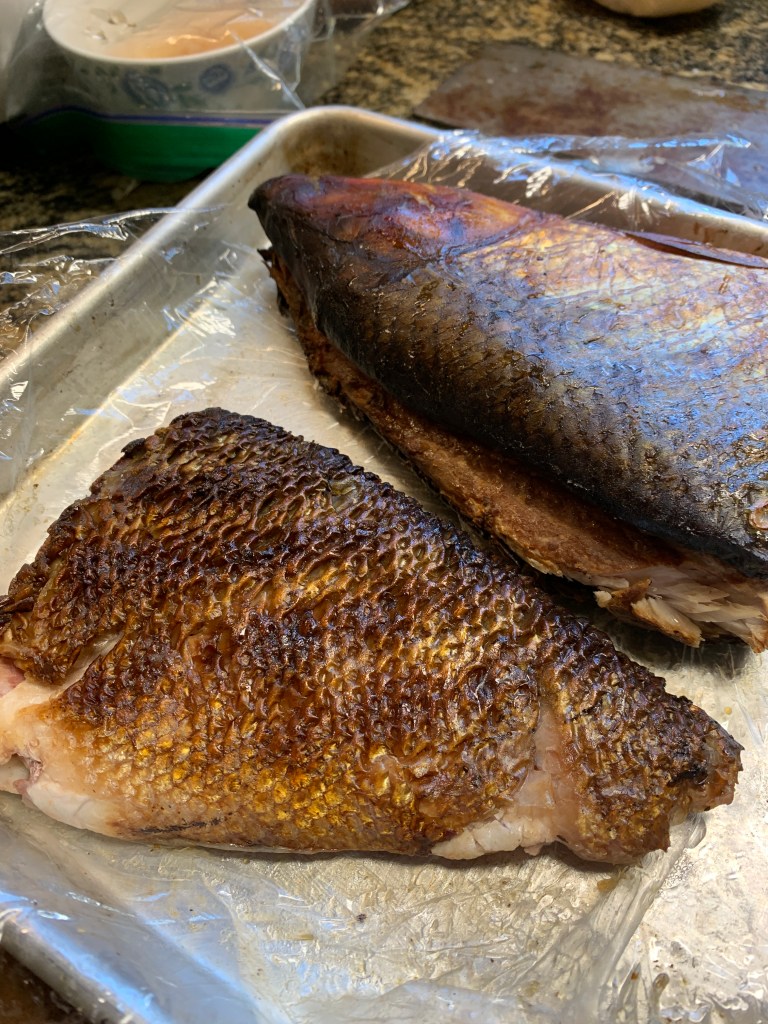
(Smoked Milkfish)
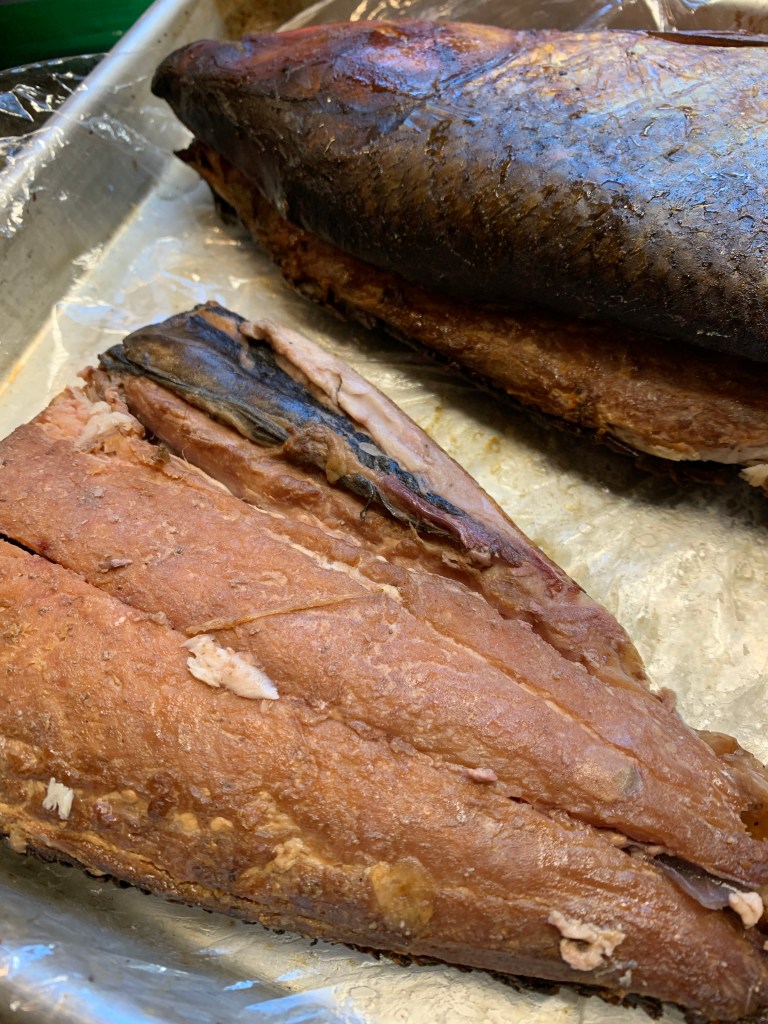
(Smoked Milkfish)


 Kusina ni Norie
You must be logged in to post a comment.