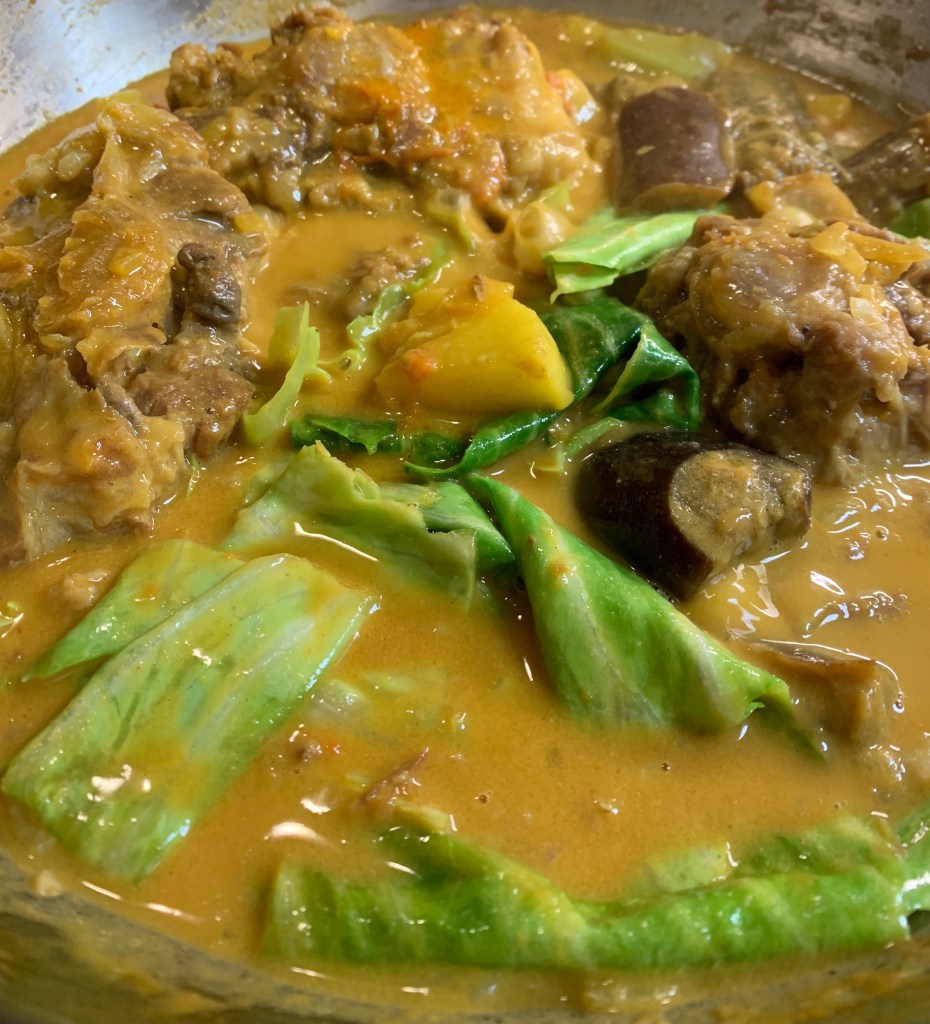
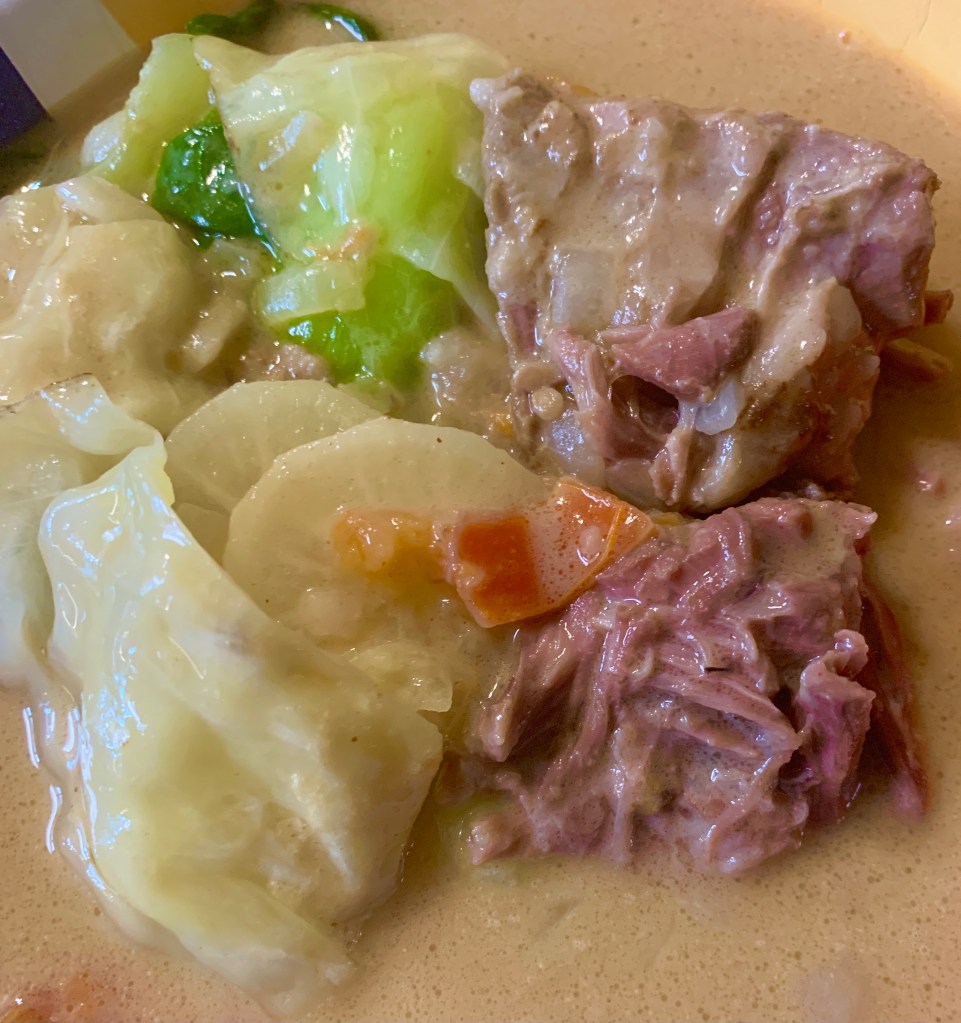
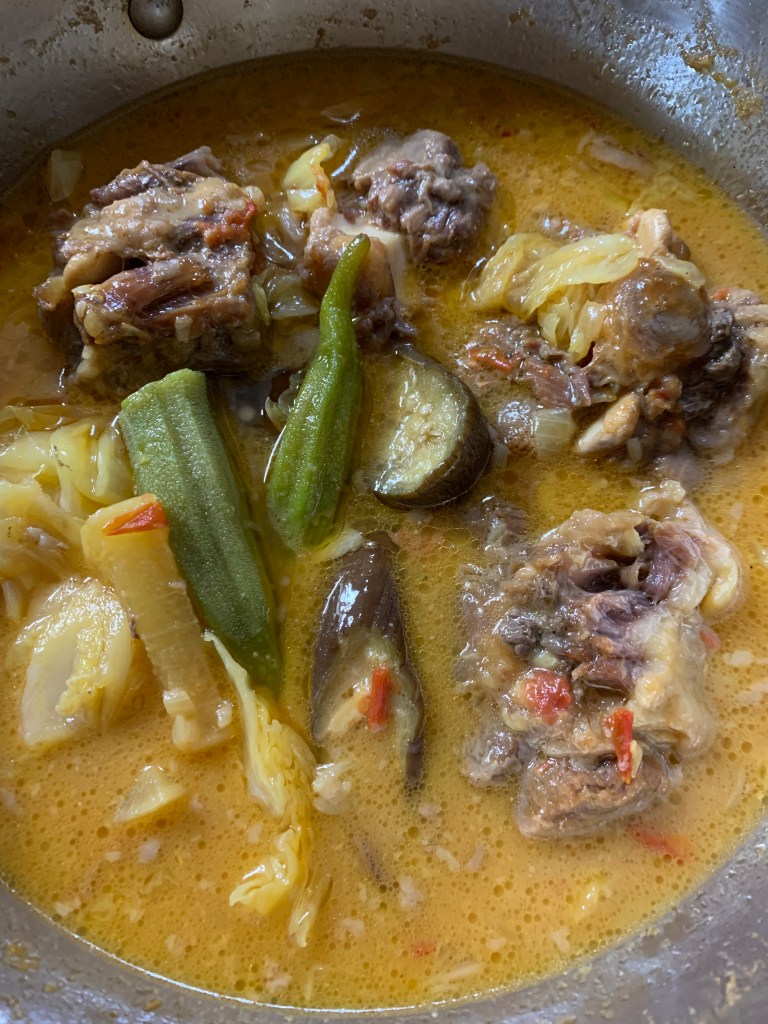
The traditional Kare-kare is made of beef intestines and/or beef stomach, like tripe or honeycomb. It is a laborious dish that is normally cooked for Sunday dinner. Usually the meat and ingredients are bought before daybreak or the day before at the market so that the intestines can be cleaned and boiled, drained and boiled again. It is supposed to be turned inside out and washed repeatedly with soap or detergent and rinsed very well then scrubbed with coarse salt and then simmered to tenderness, I can’t tell for how long.
The gravy or soup thickener is roasted raw rice then ground. Fresh peanuts are also roasted then ground or pounded fine. These are parts of the procedure to make the dish.
But here in the West, we learned to cheat to make the same dish with less effort in less time and the meat more attractive and palatable for the Western culture so we use oxtail even though the intestines and tripe are available at some ethnic stores and come cleaned and packaged.
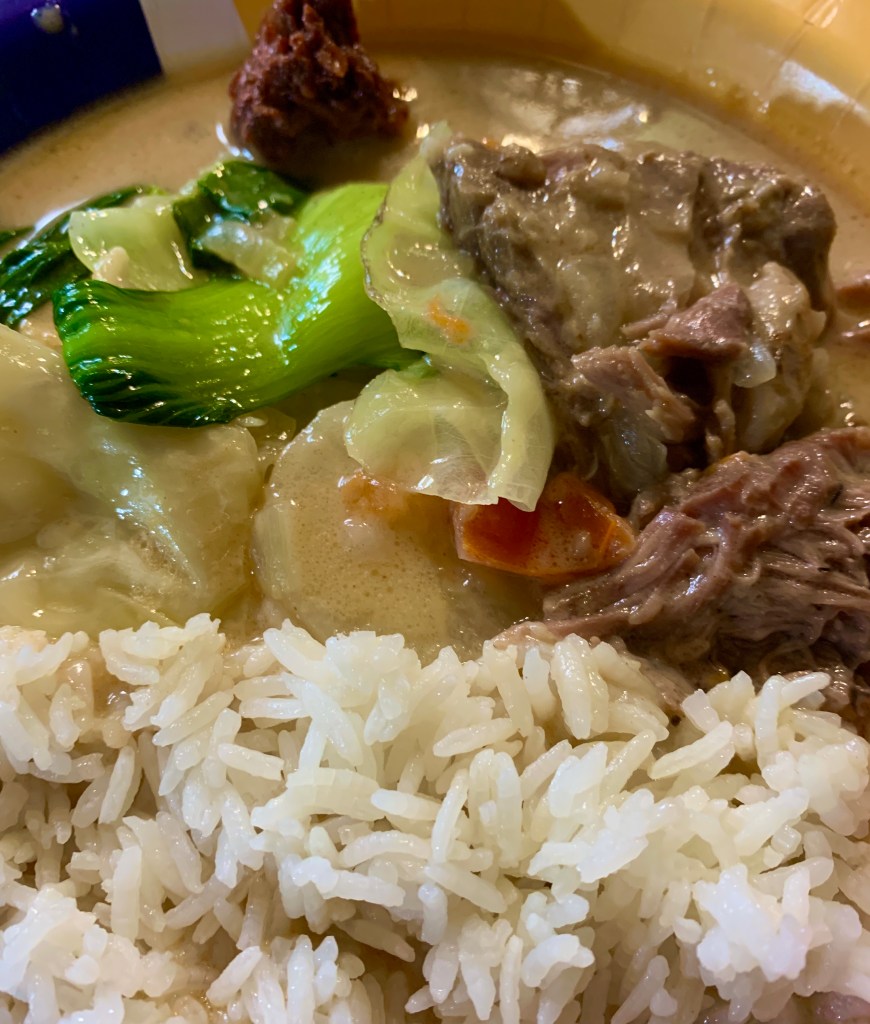
Notice that the vegetables I used as shown in this dish are only what we like to eat. Traditionally, it is loaded with different vegetables such as eggplants cut in pieces, daikon radish or long radish cut in discs, sitaw (yard long beans) cut in 2″ pieces and of course cabbage and/or bok choy.
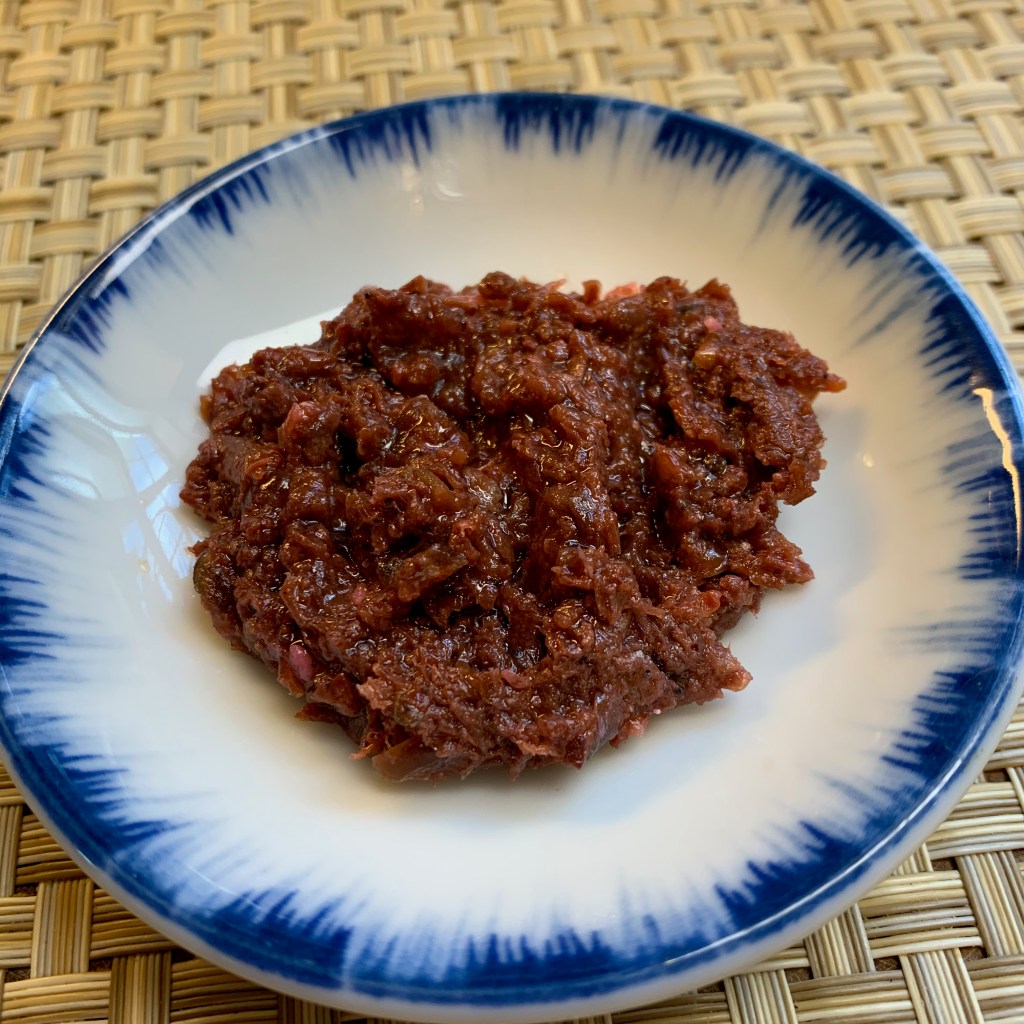
Also, this dish is eaten with “bagoong”, which is salted and fermented baby shrimp paste. Bagoong traditionally goes with Kare Kare but the smell offends those who were not raised in the Philippines or not raised in a Filipino household so it is usually omitted when I serve it to non-Filipinos lest they turn away from it. They don’t know what they are missing but they love this dish even without the bagoong. At any rate, this dish is one of my husband’s favorites but as a non-Filipino, he is exempt from having bagoong because he does not like it.
Spoon the gravy over the rice and put bagoong on the side. Add a little dab of the bagoong in each spoonful before each bite. Have fun biting and sucking the meat from the bone. This has got to be a finger food because you can’t use your fork and knife to do it. When you make it to the bone, make sure you scrape that cartilaginous matter at each end with your teeth.
It’s so good.
Another word of warning or wisdom: The recipe below is certainly enough for a family of four if they are all used to eating the Filipino way, with plenty of rice and the main dish as the side (ulam). This is not how Americans or Western people eat so, the amount of meat one package has in the recipe below is probably only enough for two if one doesn’t eat as much as the other. Rice is a side dish to them that may or may not even be touched on the plate or even if used will only be a small spoonful drowned in gravy.
If you are cooking more oxtail than what I have in the recipe, you don’t have to double the recipe. Just cook more meat in it.
Ingredients:
- 1 pkg. oxtail (about 1-1/2 to 2 lbs. and choose the package with smaller pieces rather than with few very large ones)
- 2 cloves garlic, crushed or minced
- ½ medium onion, diced (about a cup)
- 1 small tomato, diced (1/2 cup)
- 1 tsp. salt
- ½ c smooth peanut butter (or 2 large scoops with a spoon)
- 1 packet achuete con azafran (Sazon Goya) or Annatto seeds, color extracted in warm water
- Cabbage, about ¼ of head cut up in large pieces (the main vegetable)
- 1 Japanese eggplant cut diagonally, 2” thick
- ½ c cut fresh or frozen green beans (optional)
- Few pieces of Daikon radish cut in discs
- A Few stalks of Bok Choy in lieu of or with the cabbage
The above vegetables can all be used together in small quantities or any combination of what you have available and prefer. Cabbage and/or bok choy are the main vegetable ingredient in this dish. There is no correct amount of any vegetables. Use more or less or omit any to your liking.
Simmer oxtail in about a quart (4 cups) of water or enough to cover the meat arranged in single layer in a pot until very tender. Add more water if the water boils off low. The meat should almost be separating from the bones. I use a pressure cooker to save time and to use less water. Take the meat out from the broth and set both aside. The reason for separating the meat from the broth is so they would not fall apart while cooking the vegetables. But you don’t have to.
In a skillet with 1 TBS of cooking oil, sauté garlic to golden brown, then add onions and tomatoes until tomatoes are soft and onions are transparent. Spoon in some of the broth, bring back to boiling, and then add the peanut butter. Stir until thickened adding more broth if needed. Transfer to the pot with the liquid, stir and add the vegetables adding the hard to cook first, simmer a few minutes and when almost done, add back the meat then drop in the cabbage until all are done. Add salt and Goya Achuete con Azafran. Add more liquid or water if needed. It has to have thin gravy, not too thick as to be able to mix with the rice on your plate.
For bagoong, I buy “Barrio Fiesta” Ginisang Bagoong Regular or Ginisang Alamang. It is not too salty; therefore it has to be consumed quicker for it will not keep as long as the salty kind even if refrigerated.
With my method above, it is no longer special for a Sunday dinner meal. It is a regular meal at any time, at any day, including after-work meal as long as I have oxtail and cabbage on hand and a pressure cooker or an Instant Pot. Peanut butter is a staple food in my house so we always have a jar or two in the pantry.
 Kusina ni Norie
You must be logged in to post a comment.