Pakbet or Bulanglang (Vegetable Medley)
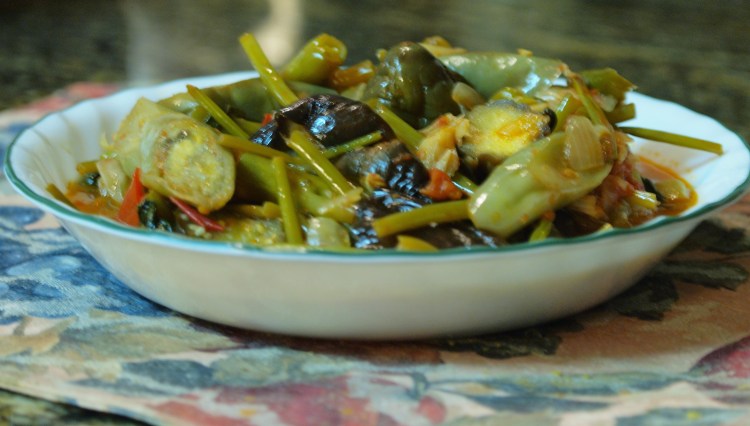
Pakbet or sometimes called Pinakbet is a vegetable stew native to the Ilocos Region in the Philippines. This region includes Ilocos Norte and Ilocos Sur which are North Ilocos and South Ilocos. Both provinces are in northern Luzon, which is north of Manila. The people are called Ilocanos and they have a different dialect, or I should say different language. Pakbet is a very popular dish adopted by almost all the peoples of all the regions in the Philippines.
There is however, another dish similar to this that is native to the Tagalogs, where Manila is part of, and is called Bulanglang (pronounced buh-lahng-lahng ). They are very similar, except Pakbet is cooked with very little liquid or almost dry and has Bagoong as a main ingredient or seasoning. Bulanglang usually has a piece of previously fried fish added to it, usually the leftover fried bangus or milkfish. It has no bagoong and a little more soupy. It is similar in taste as Ratatouille, a French vegetable dish, in which the main ingredients are tomatoes and eggplants.
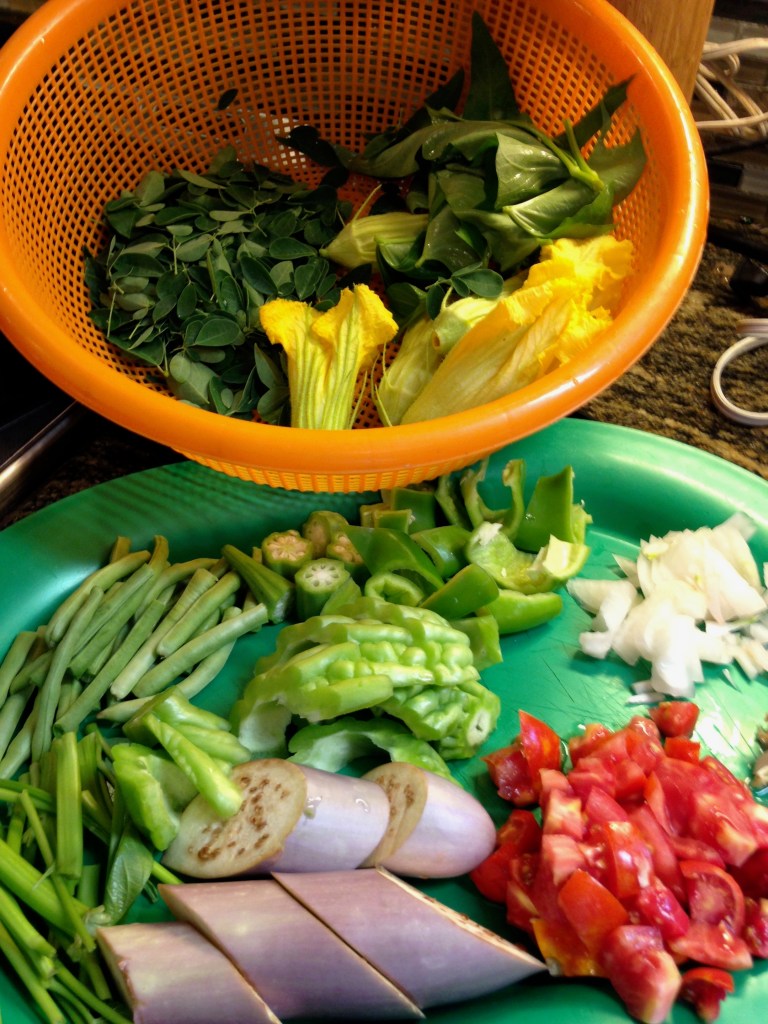
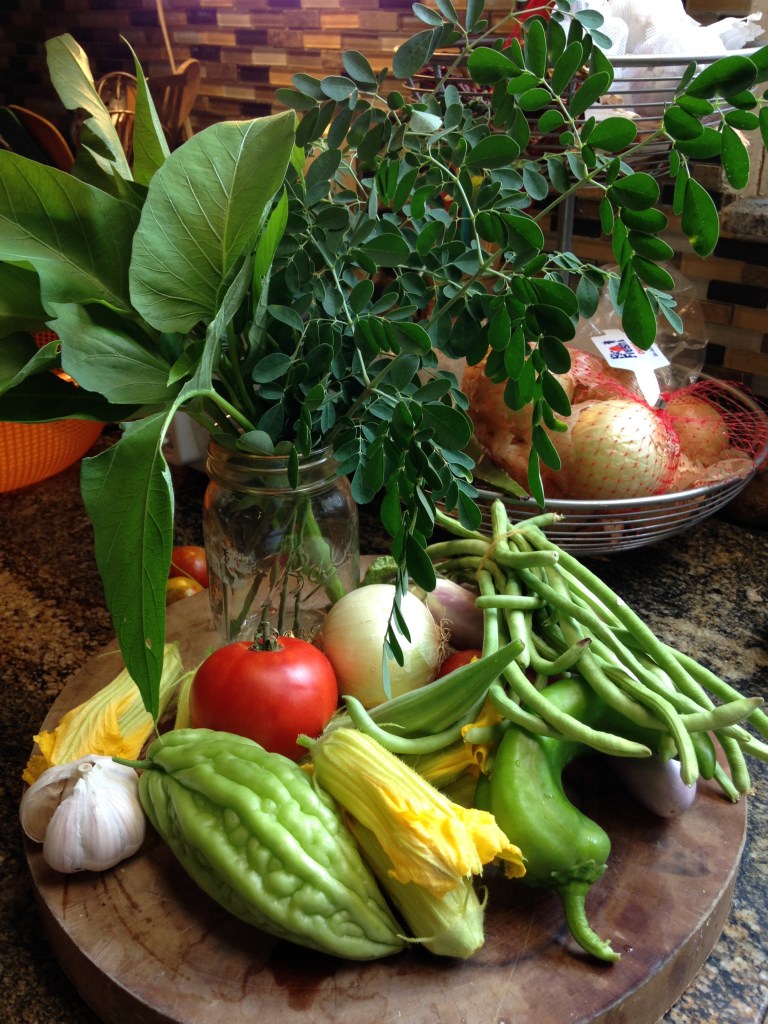
I picked a variety of vegetables from the garden and wondered what to do with them. I had several ideas but decided I would make a dish called Pakbet (pronounced pahk-bet).
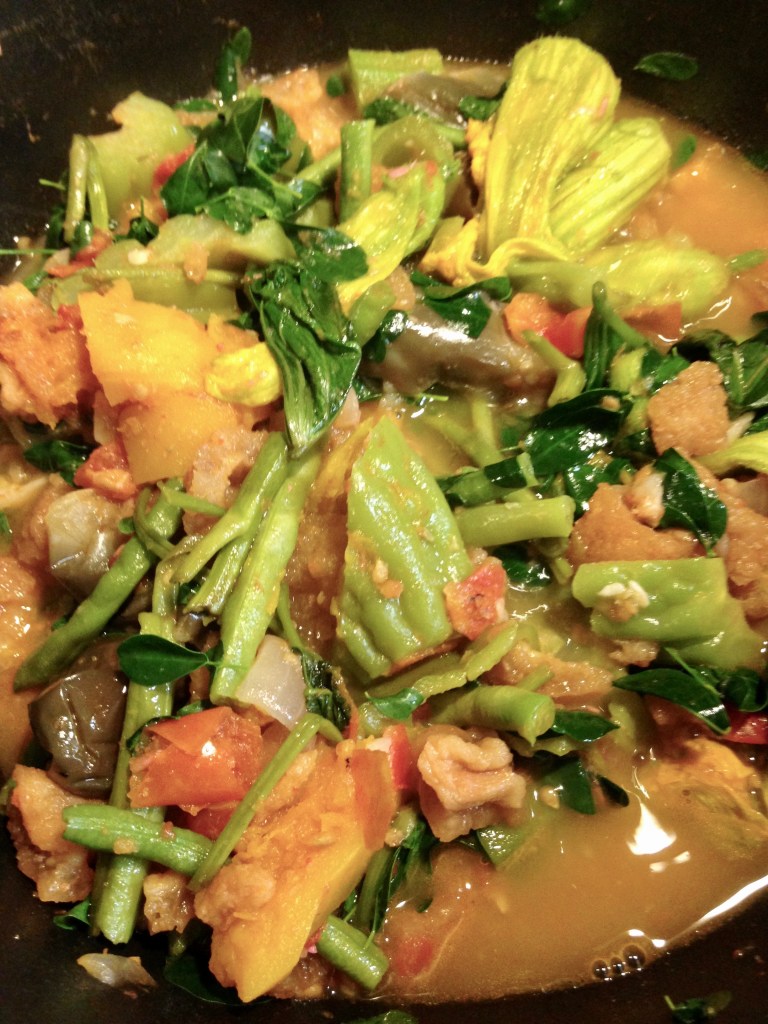
- Ingredients:
- 1/2 cup onion (1/2 medium onion) diced or minced
- 2 cloves garlic, crushed
- 1 cup coarsely diced ripe tomatoes (the more the better) or 1 can diced or whole tomatoes
- 1 tsp. minced or sliced thin ginger root
- 1 shrimp bouillon
- 1 cup chopped pork rind with fat attached (chicharrones), optional
- 1 TBS. Bagoong alamang (optional)
- 1 TBS. cooking oil
- 1 c water
- 1 Japanese eggplant sliced 1-1/2″ thick diagonally or 1/2 of an American eggplant cut into 1-1/2″ squares
- A handful of Kangkong cut 2″ long. Separate the leaves and snap stems to 2″ long
- 1/2 c sitaw or long beans snapped or cut 2″ long (green beans can be a sub.)
- 1 bitter melon seeded and sliced (optional but essential)
- A few okra, sliced (optional but would be good)
- Any kind of yellow squash (butternut, pumpkin or kabocha) cut into 1″ squares (about 1 cup)
- 4 to 6 squash blossoms if available
- Any kind of mild peppers cut into rings or 1 seeded Jalapeno pepper cut in rings
This recipe is my own concoction off of the original, which there is none, for every family or cook has its own version. The vegetables are from my own garden, so only what I raised are in this recipe. I also omitted bagoong to cater to my American husband and my children who were raised in the USA and their families who would probably detest the smell of rotten, fermented baby shrimp even though in my opinion is very palatable. Bagoong is the most important ingredient in this dish…. I beg your pardon for being sacrilegious but I found there is really very little difference in flavor without it in my adaptation of this dish. However, if you are a diehard you can add bagoong in your plate.
Serve with rice and use bagoong on the side if desired. Good alone with rice or a good accompaniment to fried fish or grilled pork ribs or pork chops.
Sauté garlic until fragrant and golden brown. Don’t burn it. Add onions and ginger root and sauté until semi transparent then add tomatoes. Stir a minute and add the shrimp bouillon and/or pork rind chicharones then add water. Let boil, simmer for a minute or two to soften the chicharones. Drop in the yellow squash if using and the eggplants. Simmer a few minutes until semi tender then add the rest of the vegetables. Cover, simmer and stir occasionally until all vegetables are tender especially the eggplants. Add more water if needed and season with salt if needed.
If you are using bagoong, add it after the tomatoes but omit the shrimp bouillon because it may become too salty.
Cook the hard vegetables first then add the greens last.
Wash Kangkong very well then separate the green leaves from the stalk and stems. Snap or cut the stems 2” long. Cook them first then the leaves last.
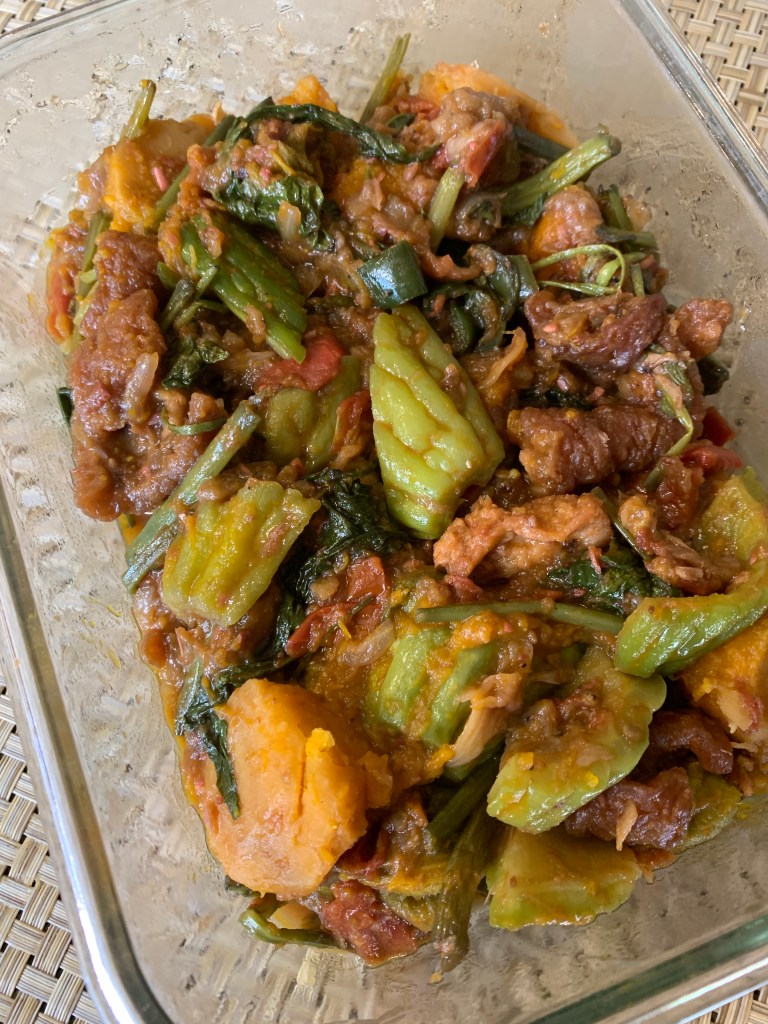
You can try cooking this with coconut milk called “ginataang pinakbet”. Follow the same recipe as above but use the canned coconut milk instead of water. It will give a delicate sweet flavor.
 Kusina ni Norie
You must be logged in to post a comment.