The Transparent Noodles

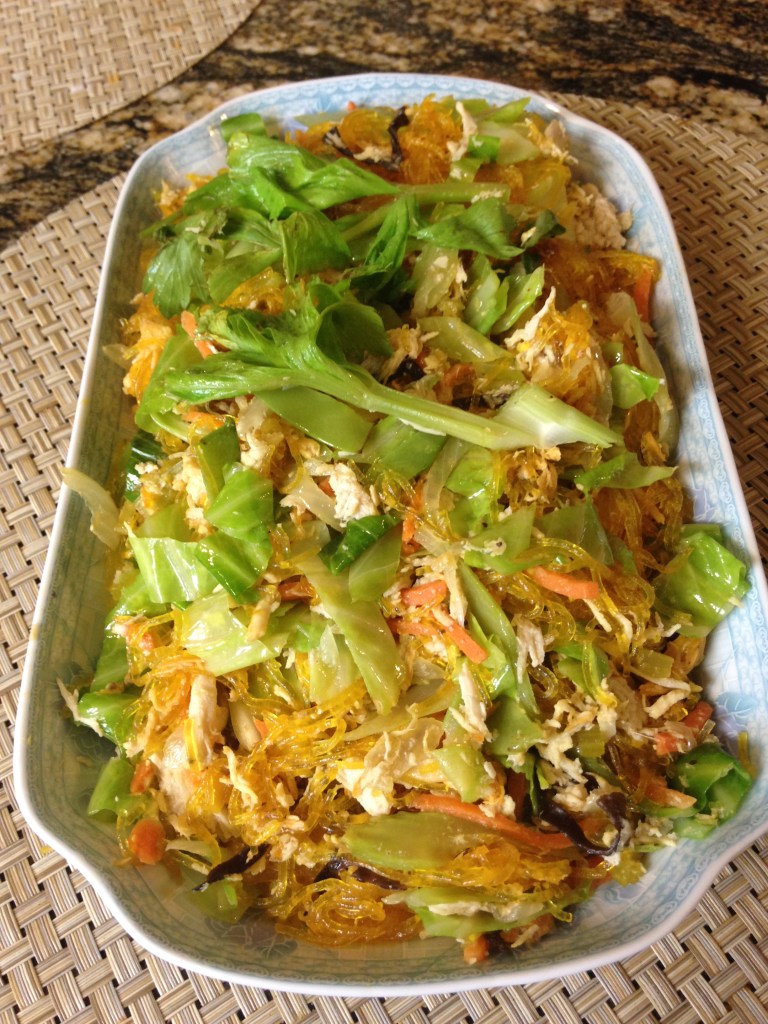
For those who do not know the difference between Bihon and Sotanghon, Sotanghon are noodles made from Mung beans. It is probably more familiar to you as the “transparent noodles”. It is also known as Bean Thread and is more commonly sold at the Asian section of grocery stores than the rice noodles, which is Bihon. Bihon noodles are made from rice flour, thus called Rice Noodles and are commonly used in the familiar pancit and Vietnamese soup called Pho.
To make this is almost the same as making the Pancit Bihon with a little difference in some ingredients. However, you can make this just as you make the Pancit Bihon if you so desire. Some people even mix the two noodles.
Serves 3 to 4
Ingredients:
- 8 oz of Bean Thread noodles (4 wads of noodles)
- 2 cans Chicken broth or 4 cups homemade chicken broth or soup (leftover broth from chicken nilaga is good)
- 2 cloves garlic crushed, minced
- ½ medium onion, sliced thin
- 1 stalk celery, sliced thin (you may include some leaves)
- 1 pinch of sliced dried Black Fungus soaked in water
- 1 packet Sazon Goya con azafran or Con culantro y achiote
- A few snow peas (optional)
- Cabbage or Chinese cabbage or bok choy sliced thin
- ¼ c carrot sticks
- 1 c shredded cooked chicken
- 1 cube chicken bouillon
- 1 TBS Soy sauce
- Salt and pepper to taste
I like to soak the sotanghon noodles in water for a few minutes to soften. When they become soft and pliable, cut them with a pair of scissors to shorten a little because they are coiled or folded that they would be very long if not cut. Drain and set aside. But don’t leave them in the water too long or they will be too soft.
Soak the black fungus in a bowl of water and proceed to cut the vegetables. If you are using fresh chicken pieces, boil them now in 4 cups of water with bay leaves. Remove the chicken pieces from the broth to cool when done. Reserve the broth. Shred the chicken with your fingers or with two forks.
Heat one TBS of oil in a wok or deep skillet then saute the garlic until fragrant, followed by the onions and saute until the onions are soft and transparent. Add the celery, the drained black fungus and the shredded chicken. Add 2 TBS water or broth then add the vegetables. Stir, cook for a few minutes until the vegetables are limp but not cooked too much. Remove half of it or most of it then add the 4 cups broth and wait till boiling then add the soy sauce and the chicken bouillon and the achuete or azafran then the drained noodles. Cook stirring from the bottom until the water is absorbed. Lower heat to barely warm and continue to stir the bottom to avoid sticking in the pan and burning. Cover and let it simmer or finish cooking for about 5 minutes. Check the noodles for doneness. If the noodles are still a little tough but already dry, add a few more tablespoons water and cover it again to cook a little longer.
Add the rest of the vegetables and stir until the vegetables are reheated. Transfer to a serving platter and let the vegetables stay on the top. Season with calamansi and black pepper at the table.
Sotanghon Soup
If you have a little leftover of the Pancit Sotanghon and everybody is tired of it, you can transform it into another dish like this one and it is so good for lunch or merienda. It is one of my favorites. It is good with steamed rice cake called “puto” that is also good with dinuguan. It is also an accompaniment to siopao.
All you have to do is boil one can of Chicken Broth, and add ¼ c water to make 2 cups and when it starts to boil drop in the leftover pancit sotanghon (one cup of the leftover). Let it boil or simmer for a minute or two and serve. Taste and adjust the seasoning.

This made 2 bowl servings. Add a tablespoon of cooked rice (if you have any) at the table and it is a quick and delicious meal. Have Club Soda on the side if you like.
Use 2 cups of liquid for every cup of cooked pancit sotanghon with all the vegetables in it.
Add more vegetables if you like.
This can also be made from scratch if you like this soup. Proceed as making the pancit but add more liquid. Use only one wad of the sotanghon noodles in the pancit recipe.
 Kusina ni Norie
You must be logged in to post a comment.