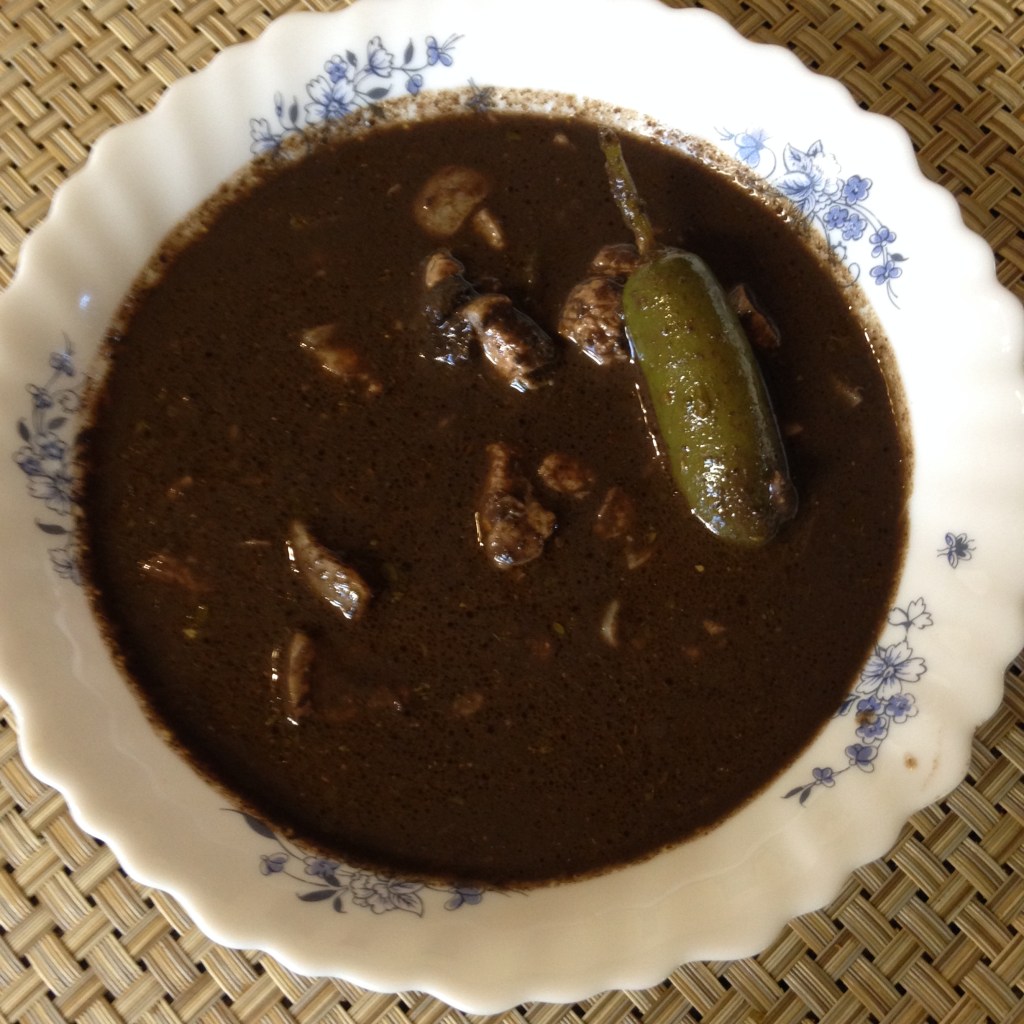
Dinuguan is a soup made with beef or pork blood. Dugô or dugó means blood, hence dinuguan is “with blood” literally. Commonly cooked with pork intestines or uteri or some other internal organs and cooked in vinegar and water.
This is a very popular dish both in the Philippines and to Filipinos abroad. Filipinos eat this for meals and also as a mid afternoon snack, usually paired with steamed sweet rice cake called puto.
Preparation and soup consistency are different when using either pork blood or beef blood. I haven’t found beef blood at the Asian market near me for a while now but they have the pork blood always available.
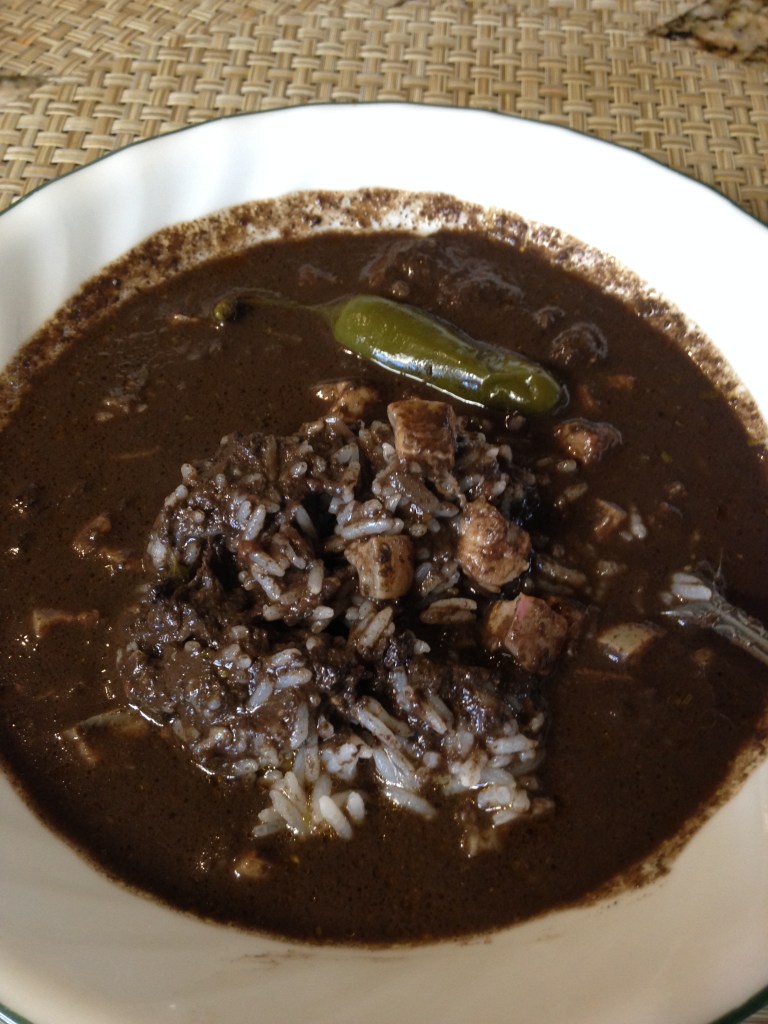
Beef blood makes a thick and black soup while pork blood makes a thinner and watery soup. Pork blood is less black and has a reddish shine. The pork blood is a coagulated gel in the container while beef blood is not. The method of preparation is somewhat different between the two.
I have not been successful yet to this day to get my husband try this even just to taste it. I think maybe the idea that this is made with blood makes him cringe. I can’t understand about the fuss because it is no different from blood sausage or other kinds of sausages that are mixed with animal blood that Europeans eat and sold at the grocery stores. People all over the world eat some kind of food made with blood, like Europeans, Asians, Africans, etc., so, Filipinos are not the only ones.
Intestines and some kinds of internal organs are a different matter. I have been here too long and I have not had any of those in so many years that I may cringe too. I am not brave enough to cook it for myself. I probably would eat it if I were eating somewhere else. I have no objections with using intestines in this dish but it is very high in cholesterol and fat that I try to lessen the fat content by using fatty pork belly which is also loaded with it.
INGREDIENTS:
- 1/2 Pork belly, (about 1 1/2 lbs.) with or without skin but any fatty cuts of pork will do.
- 4 to 5 cups water
- 1-container frozen blood (1 pint)
- 3 cloves garlic crushed or minced
- 1 cup or 1/2 med. Onion minced or diced small
- 1 Roma tomato diced or 1/2 cup diced tomato
- 3/4 C vinegar + 1/4 cup
- 2 tsp. salt
- 1 TBS Patis (optional)
- Fresh Chili peppers or 2 whole fresh Jalapenos or more
- 2 bay leaves
- 2 tsp. dried Oregano
- 2 tsp. sugar
- 1 TBS cooking oil
Dice the pork in small pieces, about ½ inch.
Heat about 2 TBS cooking oil in a pot or skillet. Saute the garlic until fragrant, followed by the onions, saute until transparent. Add the tomatoes, stir for a minute then add the pork. Stir occasionally and cook the pork until no longer pink.
If you are using a skillet, transfer it to a deep pot then proceed.
Add 1 tsp. salt, patis if using, oregano and bay leaves. Mix, then add the 3/4 cup vinegar and a couple of cups of water. Don’t stir at this point until it boils. Lower the heat to med.-low, simmer for about 5 minutes without stirring. Add the rest of the water. Heat to boiling then lower the heat and simmer covered until the pork is very tender. About 1 hour or more. Drop in the chilies or jalapenos about 15 minutes before it is done.
Check the pork if tender enough, like the fats will almost melt in your mouth, then add the prepared (see below) blood slowly or in stream while stirring. This is to prevent the blood from coagulating and becoming like a glob. Cook (simmer) for another 20 minutes until the blood is cooked.
Taste and adjust the seasoning, add the rest of the salt and sugar. If Patis was not used, add more salt. Add a scant 1/2 tsp. MSG if desired.
Blood Preparation:
Transfer the gelled Pork blood in a large, deep bowl. With your latex gloved hand (or use a plastic bag with your hand in it) squeeze, press and knead the blood until the gelled blood is almost liquefied and the chunks are reduced to almost negligible. Add the 1/4 cup vinegar and mix thoroughly. You don’t have to it the above way if you have a blender. Using a blender is the easiest. Set aside.
The above preparation is not necessary if using beef blood because the beef blood is not coagulated in the container. However, you have to thaw it first if it is frozen.
Note:
The vinegar will taste like raw vinegar if stirred while cooking and before it boils. So, refrain from stirring until after 5 minutes or so of simmering.
The taste of vinegar and salt along with a hint of sweetness have to be balanced. Remove the bay leaves before serving.
Use patis and crushed chili from the soup as dip. Eat with white plain rice, of course. Fresh pork belly can be bought at a meat market or a butcher shop. It is definitely found at Asian supermarkets that sell meat. Pork belly is the part of the hog that is used to make bacon.
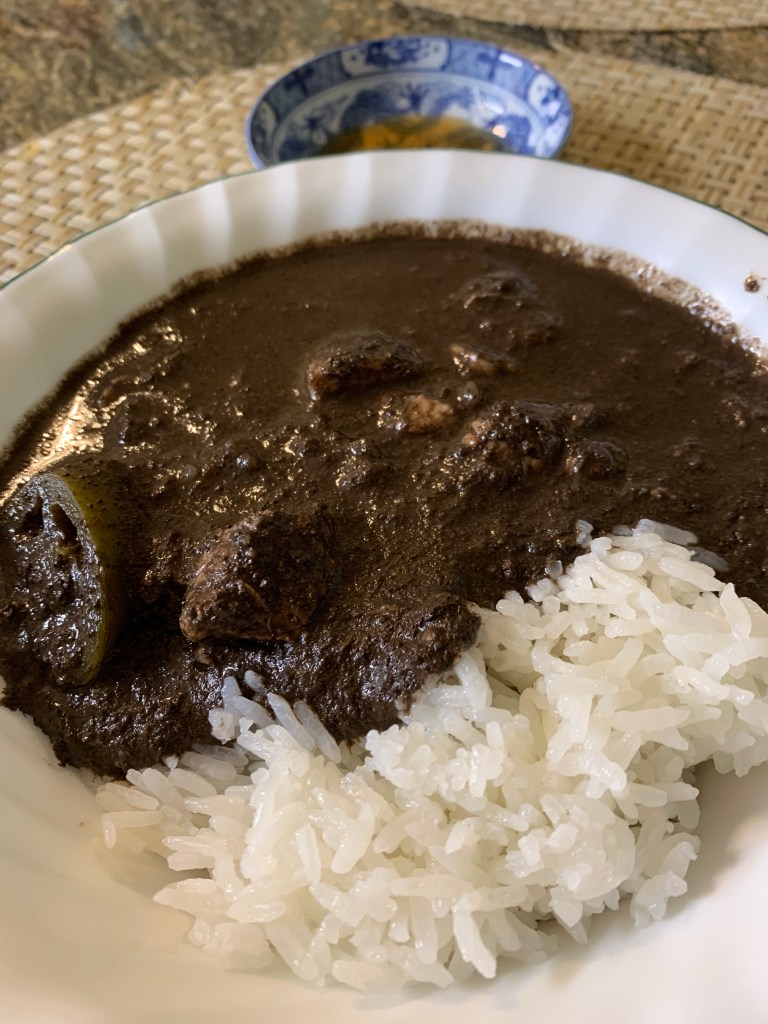
The above dinuguan is made with beef blood. Notice that it is thicker and more grainy. It is also blacker. I did not notice any difference in flavor between using beef blood and pork blood, only its texture against my tongue. Using pork blood is smoother in texture.
The minute particles or the coagulates of the beef blood tend to settle to the bottom of the pot and separate from the water that it needs to be stirred before serving if it has been sitting for a while.
 Kusina ni Norie
You must be logged in to post a comment.