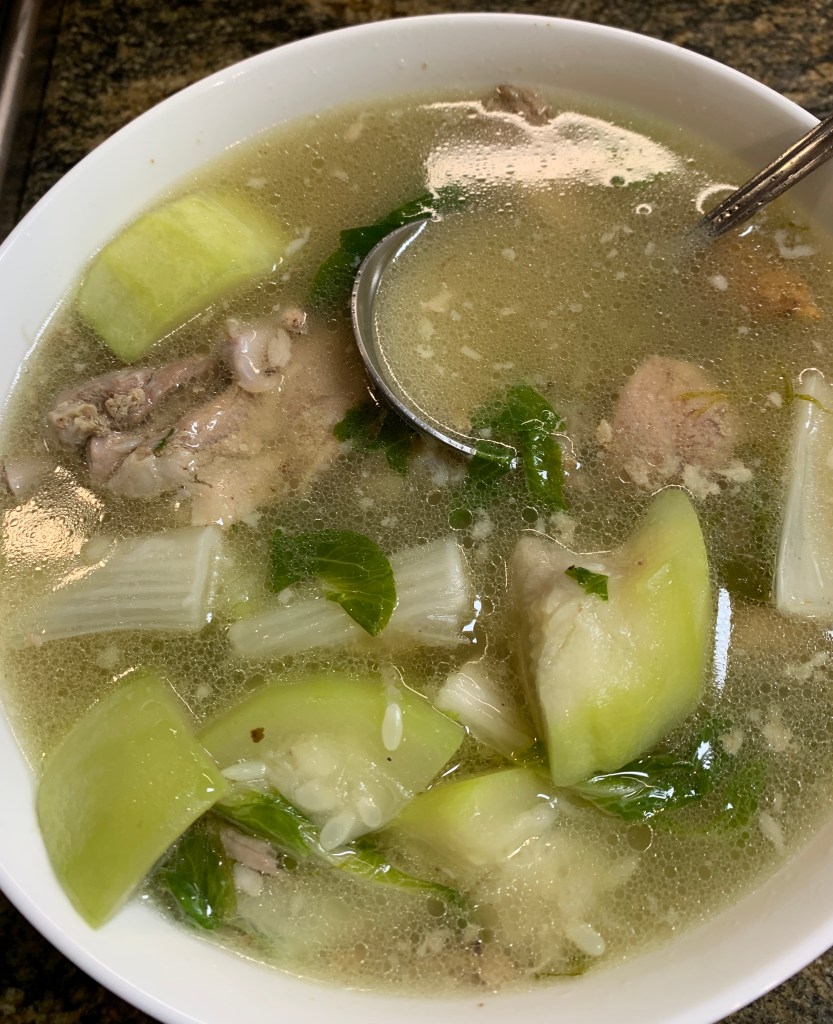
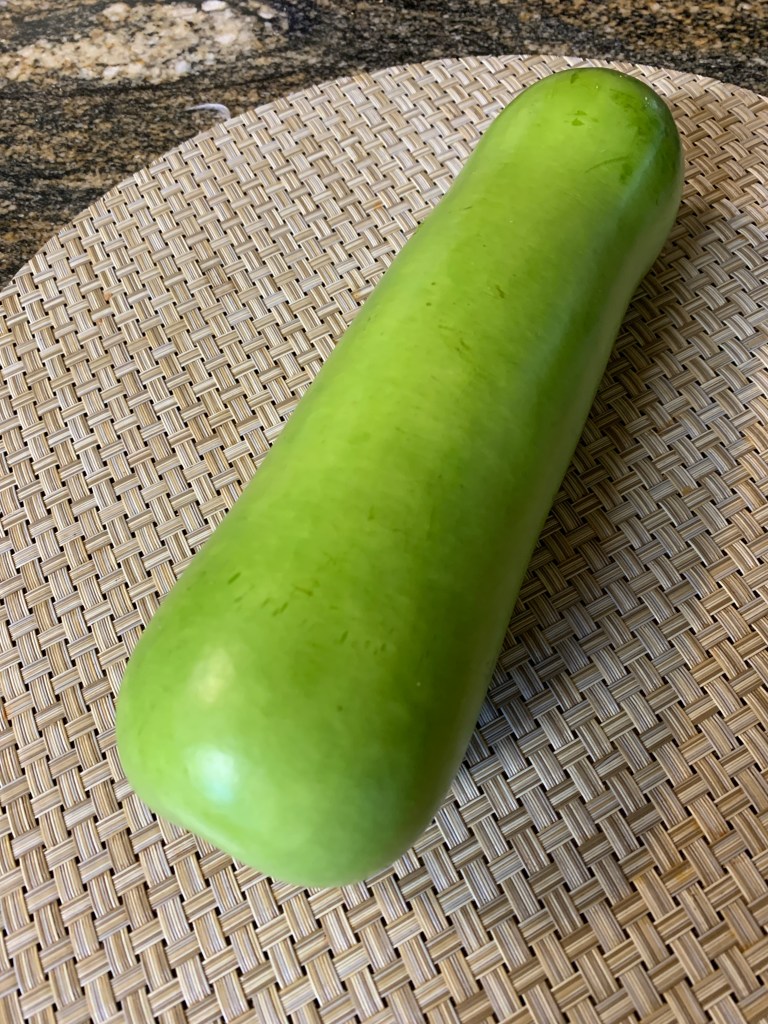
This particular dish was my family’s favorite when I was growing up. We didn’t have a name for it and my sister just called it “nilagang baboy sa luya”, which means boiled pork with ginger root, so I invented the name “Pesa” because it is the same cooking method as Pesang Isda (fish). This was always cooked with upo squash (gourd) but upo is not always available here except in Asian stores. The perfect replacement for upo is chayote squash, which has the same flavor and almost the same texture as the upo and available at most grocery stores.
The upo in the Philippines that I remember were very long, about a yard long but you could buy them cut in shorter lengths at the market just for what you would need. The whole upo is too big unless you are feeding an army. The modern upo sold here now are short, only about one foot long. Perhaps they are hybrids. Even then, it is still big for this dish so you can save half of the upo for another kind of dish like ginisang upo later.
This dish is similar to Tinola, chicken or pork ribs except it is not cooked with sauteed garlic and onions. It is simply boiled in water with ginger and black peppercorns until tender. It is a very simple and easy dish to make.
Procedure and ingredients:
- A few separated pork spare ribs
- 1 inch ginger root crushed lightly
- 1 tsp. whole black peppercorns
- 1 scallion (green onions) cut 4 inches long
- 6 to 8 cups of water
- Half of a small Upo squash, peeled then cut about 1” cubes (about 2 cups or so). Include the seeds and the core if the upo is very young. Or substitute chayote squash, peeled and then cut in large pieces. Cut off the seed.
- 1 or 2 bay leaves (optional)
- Salt, MSG
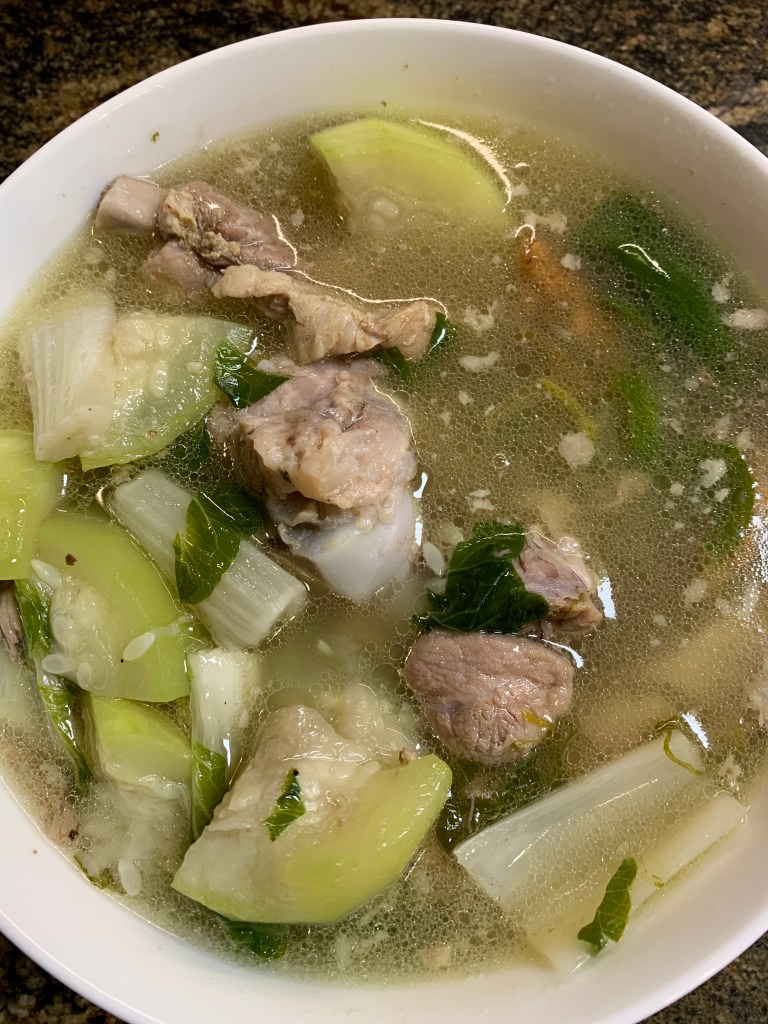
Wash the spare ribs and boil in 6 to 8 cups of water with the ginger root, peppercorns, green onions, bay leaves and 1 tsp. salt. Strain off the foam then simmer covered until the meat is tender and almost falling off the bone, about 1 hour.
Add ½ tsp. MSG or Accent. You can scoop out and discard the peppercorns, ginger root, bay leaves and green onions before dropping in the upo squash. You can add a few greens like bok choy or spinach for color but optional. Cook until upo is soft and tender. Adjust salt to taste.
We like to dip it in patis and lemon or calamansi. It is usually eaten with rice in the bowl with the soup or separately with the rice on a plate.
 Kusina ni Norie
You must be logged in to post a comment.