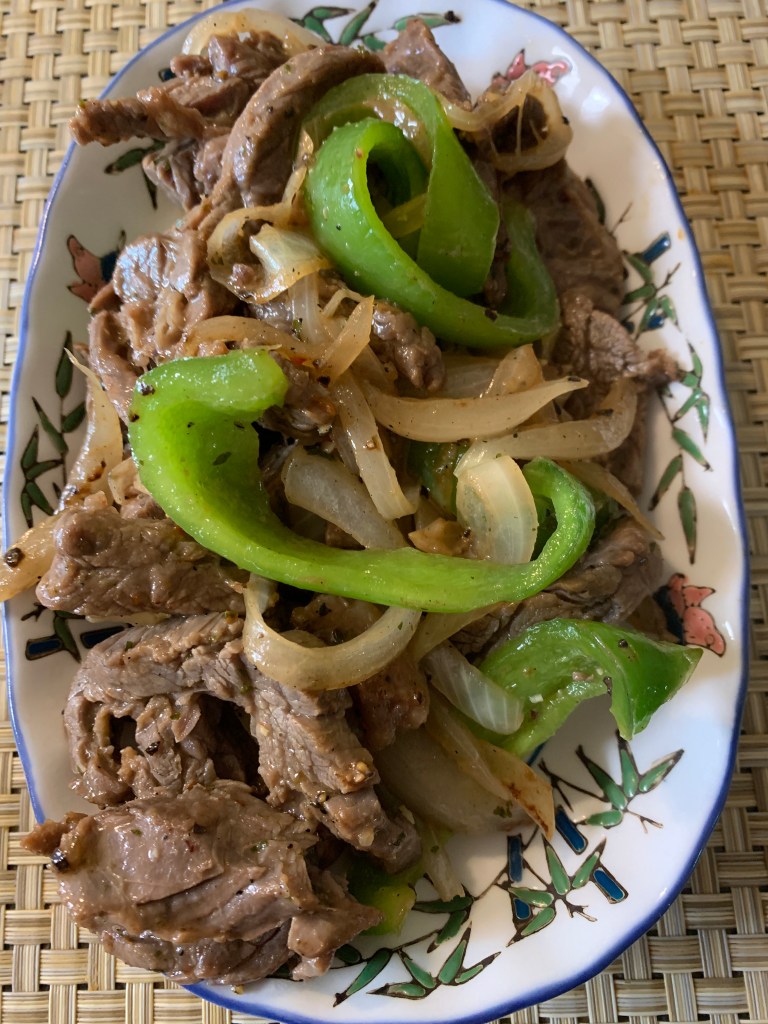
Fajitas is a popular dish at Mexican restaurants all over Texas and perhaps other states too. It is my husband’s favorite dish to order everytime we go to Mexican restaurants and then he compares whose is better. I don’t ever see him order something different other than fajitas.
Fajita is the beef’s “skirt” similar to the flank. I used to buy this cut of beef at the grocery store years ago because it was cheaper and I found that it had a good flavor when I seasoned it with soy sauce and lemon then broiled or grilled. I liked it better than a steak because it is more flavorful except it is a little bit chewier. It is not tough if it is sliced against the grain.
The popularity of fajitas in restaurants took off and the demand soared. The restaurants started buying them before they hit the markets. The price went up sky-high, even more expensive than T-Bone steaks or Ribeyes so I didn’t bother to even look at it anymore. I stopped buying that cut of meat and just ate Fajitas at the restaurants. It is usually the most expensive item on the menu.
To make the price reasonable to consumers the stores or the butchers started to market fajita lookalikes and labeled them like “sirloin fajitas”. They were cut like fajitas but not the real deal. I tried a package and made some fajitas as pictured above. I cooked it on a skillet and was not bad. The flavor was almost as good as real fajitas but not quite because the texture cannot be duplicated.
I have not bought this cut of meat for several years since it got so expensive because I felt its cost had gone outrageously high for something that was almost a giveaway before. Then many, many years later, while shopping one day I spotted fajita meats were on sale so I looked at them. I looked closely and read the label carefully (it may be tricky) and it was the real fajitas. They were on sale that day but the packages were huge that one package cost around $50.00. I forgot the price per pound but I knew it was much lower than the regular price. The limit was 2 packages but I could only use one because they were very large. I bought a package hoping I did not waste my money for something we could not eat for how tough it might be.
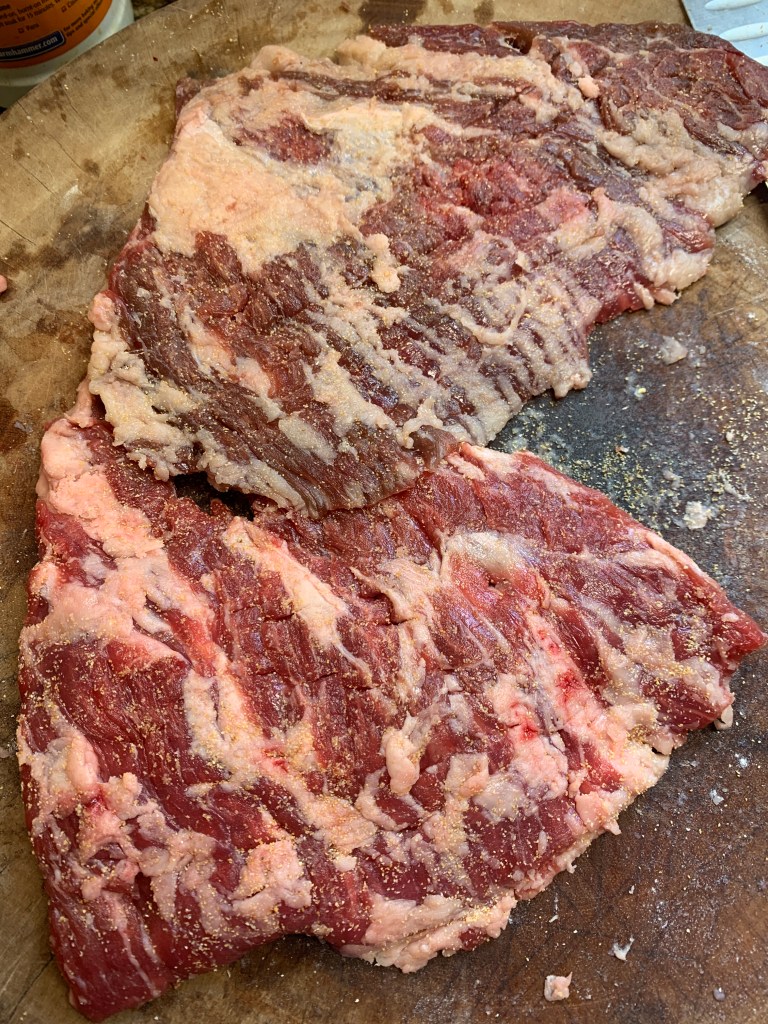
When I opened the package I found there were two large and long pieces of whole skirts in it. They may have been the whole skirts on both sides of a cow. I felt that it justified the cost of one package. After all, the unit price was the lowest I’ve seen it sold. I divided them into sizes for two-serving meals and wrapped each piece tightly with plastic wrap then put them all in a freezer bag, labeled the bag then put the bag in the freezer. This way I can just get a package or packages for however much fajitas I want to thaw and cook.
I cooked one piece to try how it was and decided to grill it instead of pan seared. It was very good, tender, tasty and juicy. I’m glad I bought it and glad that I have a few small packages in the freezer that I can cook when we want to have fajitas again. I even have enough to cook for a small company.
Procedure:
Mix together:
- 1 tsp. salt (table salt)
- 1 tsp. garlic powder
- 1 tsp. baking soda
- 1 tsp. chili powder
- ½ tsp. black pepper
- ½ tsp. paprika
- ½ tsp. ground cumin (optional)
- ½ tsp. MSG
Other ingredients:
- 1 TBSP. lime juice (or lemon juice)
- 1 TBSP. light soy sauce
The seasoning above is enough for 1 to 1 1/2 lbs. of meat. Use more or less and adjust to your taste.
TIP:
I slice off or remove the sinew, like a silvery membrane attached to the meat under some of the extra fat with a very sharp knife when I see them. Usually they are already removed and trimmed by the butcher but sometimes there are some left. The membrane will toughen when cooked and that is what makes the fajita tough. It may be a lot of extra work but it is well worth it.
Generously shake the dry ingredients on both sides of the meat and massage it on the meat making sure all sides are seasoned well.
Add the soy sauce and the lime juice on both sides. Massage it well.
Put in a plastic bag or a covered container and let stand for a few hours in the fridge. One hour is okay but longer is better, even all night. The baking soda and the lime juice act as tenderizer.
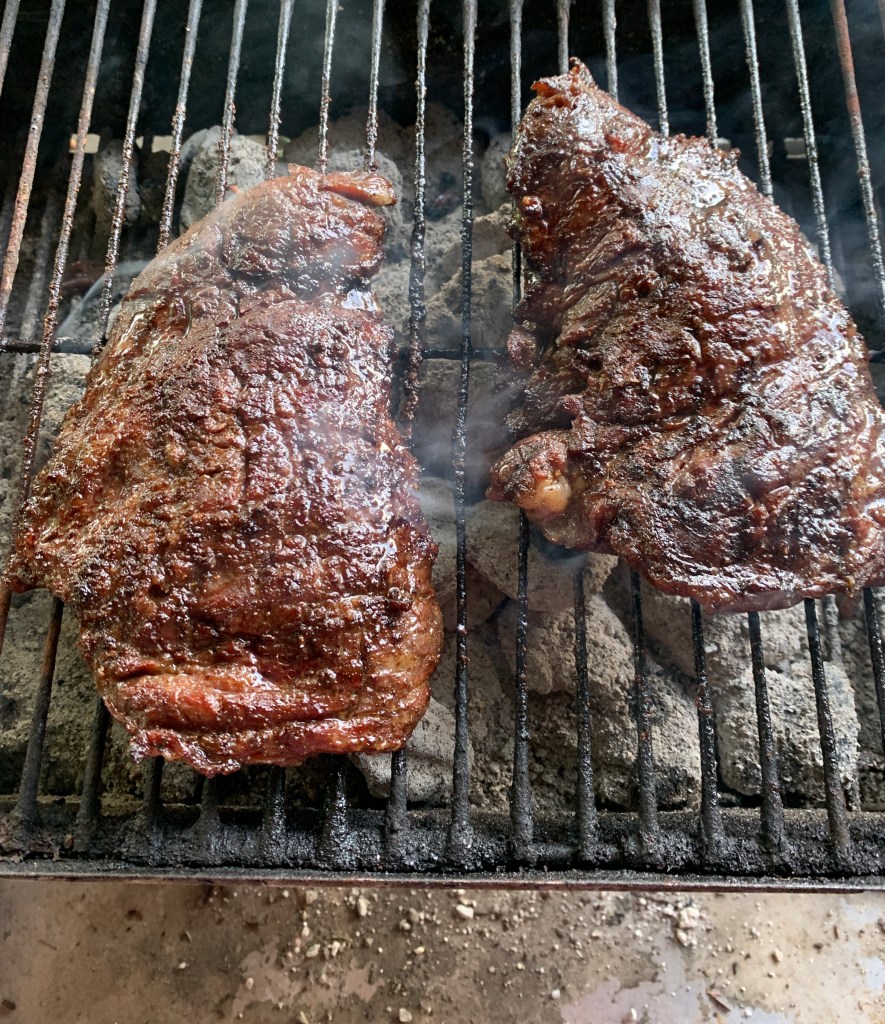
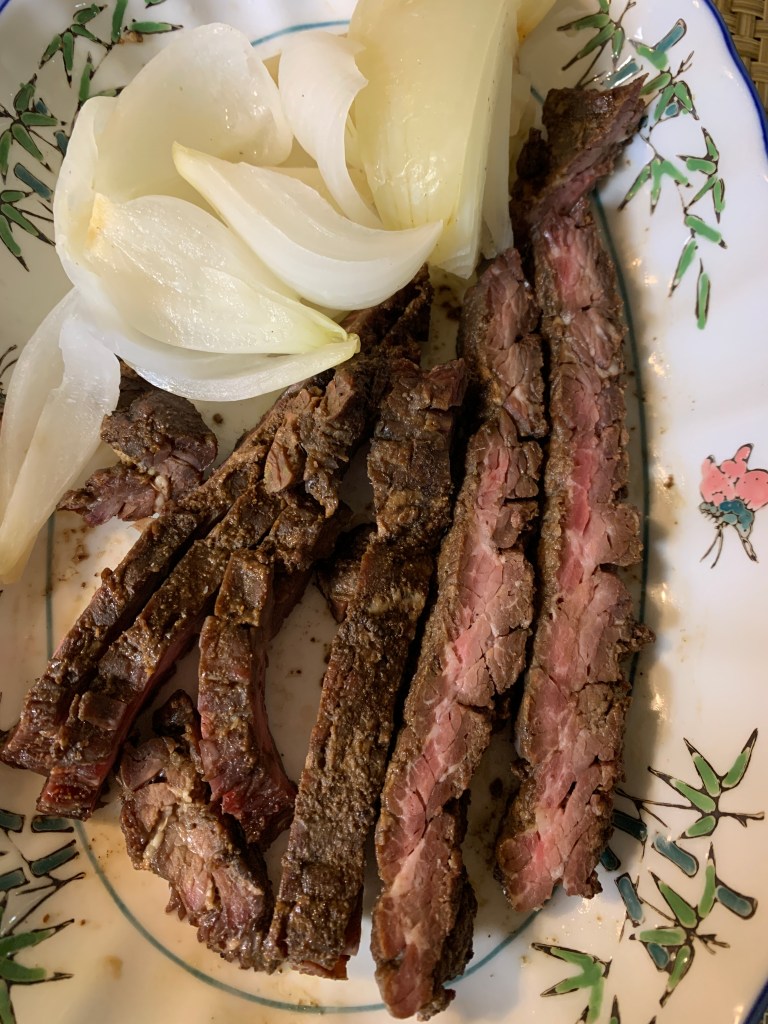
Grill on a hot bed of charcoal turning often until browned and cooked. For medium well, grill 4-5 minutes per side. Take it out and let cool for a few minutes then slice thinly against the grain.
Slice an onion thinly lengthwise and a green bell pepper if desired. Saute them together in a skillet and garnish the fajitas with them.
If cooking the fajitas in a skillet instead of grilled, slice the meat thinly across the grain then saute in a very hot skillet or griddle that is lightly greased or oiled. Saute until desired doneness then drop in the vegetables and saute them together until the vegetables are cooked.
To eat the fajitas authentically, eat them wrapped in a warm tortilla dabbed with sour cream and with pico de gallo, avocado or guacamole on the side, and a few slices of pickled jalapenos.
Pico de gallo is a mixture of chopped tomatoes, onions and cilantro.
 Kusina ni Norie
You must be logged in to post a comment.